
Apex Peptides Blog.
Articles and interesting information about peptides and Apex Peptides as a whole.
We try to update our website regulary with intesteresting information, reasearch material and other information about and within the industry. Keep coming back to keep upto date with any developments.
5-Amino-1MQ and Metabolic Health
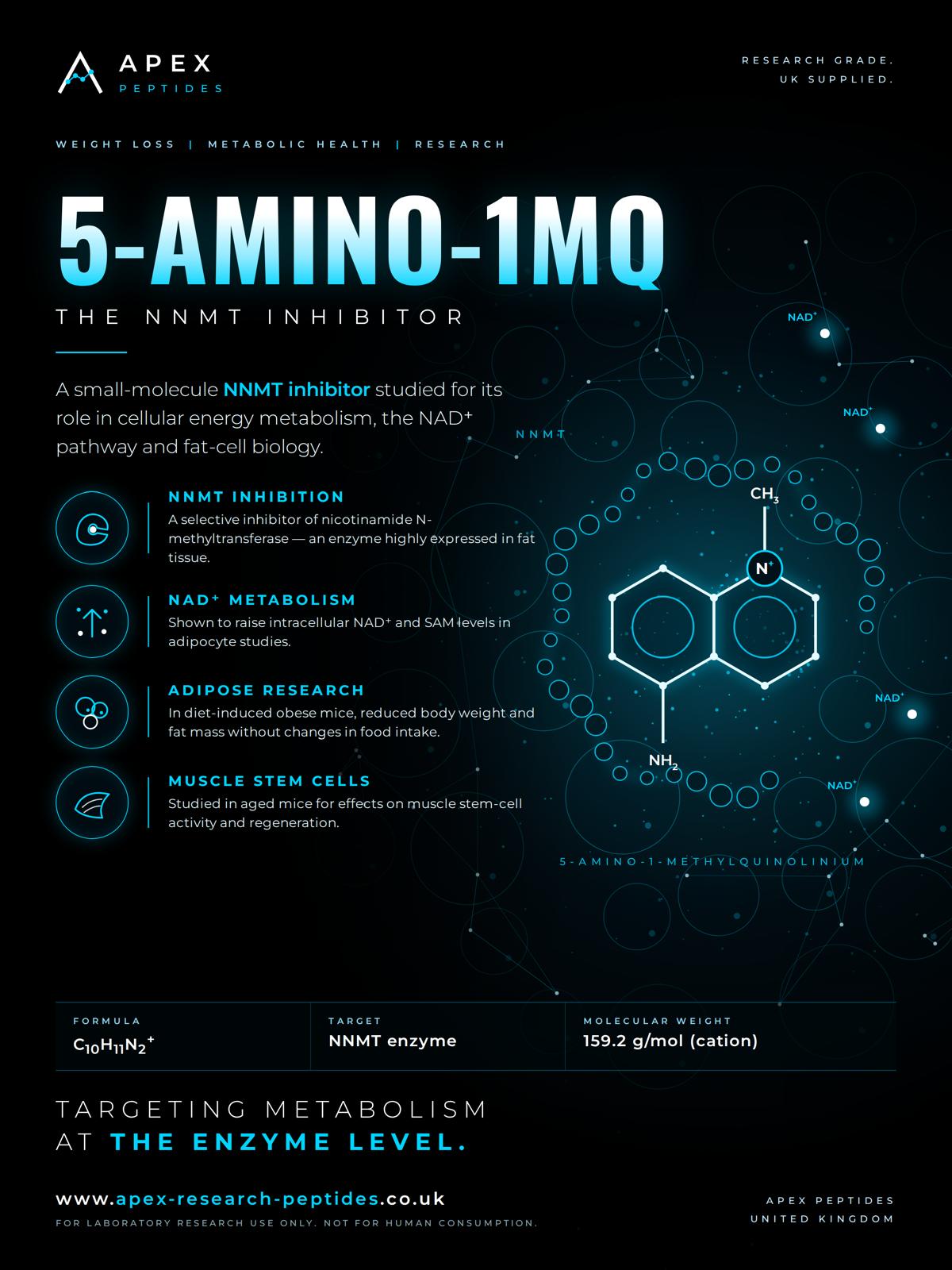
5-Amino-1MQ and Metabolic Health: Why Researchers Are Paying Attention
What happens when you turn down the activity of a single enzyme involved in metabolism? With 5-Amino-1MQ, researchers have a way to test that question. Early studies in mice have found changes in body fat, blood sugar regulation and liver fat, giving scientists several leads to follow.
What is 5-Amino-1MQ?
5-Amino-1MQ, short for 5-amino-1-methylquinolinium, is a small synthetic molecule often discussed in peptide circles. It inhibits an enzyme called nicotinamide N-methyltransferase, or NNMT, which helps process nicotinamide, a form of vitamin B3. By blocking NNMT, researchers can study how changing this pathway affects the way the body handles energy. Read the original laboratory research.
What have the early studies found?
In an 11-day study, mice with diet-induced obesity that received 5-Amino-1MQ lost weight and had less fat in a specific abdominal fat depot than control mice. The groups ate similar amounts of food. That result raised an interesting question for further research: could targeting NNMT change how the body handles energy even when food intake stays similar? Read the 2018 mouse study.
A later, 28-day mouse study looked beyond body weight. Treated mice gained less fat, responded better to insulin and had less fat accumulation in the liver. Looking at several measures together gives researchers a clearer picture of how NNMT inhibition might affect metabolic health. Read the 2024 mouse study.
Where does healthy ageing fit in?
How well the body manages blood sugar and where it stores fat both matter to health as we age. That makes NNMT an interesting avenue for researchers studying healthspan, the years we spend in good health. So far, the encouraging findings come from short animal studies. Human safety, metabolic benefits and effects on lifespan remain open questions.
The next step is to find out whether those early changes can translate into lasting improvements in people. In the meantime, 5-Amino-1MQ gives scientists a practical way to explore how a single enzyme can influence several aspects of metabolism at once.
Why Big Pharma Wants a Bigger Piece of the Next Frontier in Medicine
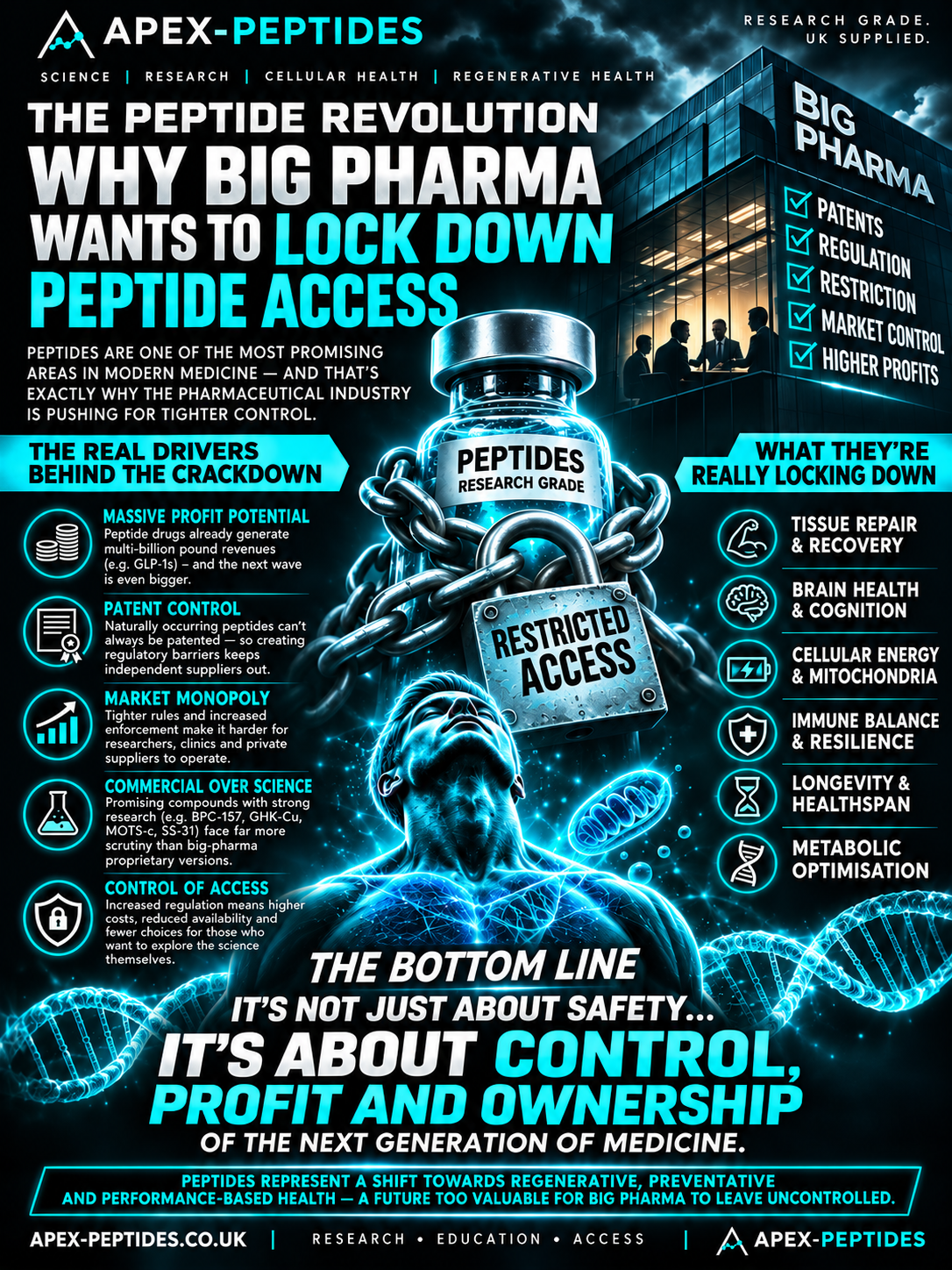
THE PEPTIDE REVOLUTION
Why Big Pharma Wants a Bigger Piece of the Next Frontier in Medicine
Are peptides becoming too valuable to remain outside the pharmaceutical mainstream?
For decades, the pharmaceutical industry has dominated the development, manufacture and distribution of modern medicines.
But a rapidly expanding area of medical research is attracting enormous attention: peptides.
These relatively small chains of amino acids are involved in some of the body's most fundamental biological processes, from cellular communication and hormone signalling to metabolism, tissue repair and immune regulation.
And their therapeutic potential is becoming increasingly difficult to ignore.
As pharmaceutical companies invest billions in peptide-based medicines, regulators are also increasing scrutiny of unlicensed peptide products.
This raises an important question:
Are tighter restrictions simply about protecting patients, or could the increasing commercial value of peptides also be influencing who gets access to them?
The answer deserves closer examination.
1. Peptides Are No Longer a Niche Area of Research
Peptides are not new.
Insulin, one of the most important medicines ever developed, is a peptide hormone.
But advances in biotechnology have dramatically expanded what researchers can achieve with peptide-based compounds.
Scientists are investigating peptides for applications involving:
-
Tissue repair and regenerative medicine
-
Metabolic health and weight management
-
Mitochondrial function and cellular energy
-
Inflammation and immune signalling
-
Neurological health
-
Age-related biological changes
-
Hormonal regulation
Some peptide medicines have already transformed clinical treatment.
The extraordinary commercial success of GLP-1-based treatments demonstrates how valuable this class of molecules can become when supported by rigorous clinical research.
Other experimental compounds, including BPC-157, GHK-Cu, MOTS-c and SS-31, have generated considerable scientific interest, although their evidence bases and regulatory status differ substantially.
The important distinction is that promising laboratory research does not automatically establish a treatment as safe or effective in humans.
Nevertheless, the expanding scientific interest is undeniable.
Scientific reference:
Therapeutic Peptides: Current Applications and Future Directions – Nature Reviews Drug Discovery
2. Why Pharmaceutical Companies Are Investing Heavily in Peptides
The commercial appeal of peptide therapeutics is straightforward.
Peptides can interact with specific biological targets, making them attractive candidates for medicines designed to influence particular physiological pathways.
Successful peptide medicines can also generate substantial revenue.
Developing an approved medicine requires significant investment in manufacturing, clinical trials, quality control and regulatory approval.
In return, companies may obtain patent protection, regulatory exclusivity and other commercial advantages.
These mechanisms can provide a period of reduced competition, allowing manufacturers to recover development costs and generate profits.
There is nothing inherently improper about this system.
Without commercial incentives, many important medicines might never reach patients.
However, it creates an unavoidable tension.
A compound's scientific potential and its commercial value are not necessarily the same thing.
A naturally occurring peptide may have interesting biological properties without offering the same patent opportunities as a newly engineered pharmaceutical formulation.
Companies therefore have strong incentives to develop proprietary molecules, delivery systems and formulations.
This raises a legitimate question about whether commercial priorities always align with the widest possible exploration of promising compounds.
3. Why Is Access to Certain Peptides Becoming More Restricted?
As interest in experimental peptides grows, regulators are paying closer attention to products sold outside established pharmaceutical channels.
In the United States, the FDA has raised safety concerns about certain substances used in compounded medicines, including some experimental peptides.
In the United Kingdom, products marketed for human therapeutic use can fall under medicines legislation and may require appropriate authorisation.
These restrictions can affect manufacturers, suppliers, healthcare professionals and consumers.
But why are they happening?
The official explanation: safety and quality
Regulators point to several legitimate concerns:
-
Limited human safety data
-
Unknown long-term effects
-
Potential contamination or impurities
-
Inconsistent manufacturing standards
-
Incorrect concentrations or labelling
-
Immune reactions and other adverse effects
These are genuine considerations, particularly for injectable products.
However, an important distinction is often overlooked.
A lack of sufficient clinical evidence is not the same as scientific proof that a compound has no therapeutic potential.
An experimental peptide may be promising while still lacking the evidence necessary for routine medical use.
That distinction matters.
Regulatory restrictions should protect patients without unnecessarily discouraging legitimate scientific investigation.
Regulatory references:
FDA – Certain Bulk Drug Substances for Compounding
UK Medicines and Healthcare products Regulatory Agency (MHRA)
4. Patents, Profits and the Question of Control
One of the most interesting aspects of peptide development is intellectual property.
Naturally occurring biological molecules can present different patent challenges from newly designed compounds.
Although specific applications, formulations, manufacturing processes and modified peptide structures may qualify for protection, naturally occurring substances are not automatically patentable simply because someone discovers them.
This creates an incentive to develop proprietary versions of biologically active molecules.
A pharmaceutical company may invest in modifying a peptide to improve its stability, absorption, duration of action or therapeutic effectiveness.
These improvements can be scientifically valuable.
They can also create commercially protected products.
The concern arises when the financial rewards associated with proprietary medicines become much greater than those associated with investigating existing compounds.
Could commercially unattractive peptides receive less research funding, even when their biological activity deserves further investigation?
That is a reasonable question.
However, it is important not to confuse commercial incentives with proof of deliberate suppression.
There is currently no reliable evidence establishing that the pharmaceutical industry collectively directs peptide restrictions to eliminate competition from independent suppliers.
What is clear is that intellectual property, investment and regulation all influence which treatments are developed and ultimately reach patients.
5. The Science Is Moving Faster Than Public Understanding
One reason peptides have attracted so much attention is their involvement in fundamental cellular processes.
Consider several examples.
GHK-Cu
GHK-Cu is a naturally occurring copper-binding peptide investigated for its roles in skin biology, extracellular matrix regulation and wound repair.
Laboratory and preclinical studies have produced interesting findings, although these do not establish the effectiveness of systemic peptide treatment in humans.
BPC-157
BPC-157 has attracted attention because of preclinical studies examining tissue protection and healing.
Much of the research involves animals, and robust human clinical evidence remains limited.
MOTS-c
MOTS-c is a mitochondrial-derived peptide being studied for its relationship with metabolic signalling and cellular adaptation.
Its discovery has helped expand scientific understanding of mitochondrial communication.
SS-31 (Elamipretide)
SS-31 has been investigated for its interaction with mitochondrial membranes and potential effects on cellular energy processes.
Unlike many compounds promoted in the research-peptide market, it has undergone substantial clinical development, illustrating how an experimental peptide can progress towards regulated medical treatment.
These examples demonstrate why peptide science deserves serious attention.
They also demonstrate why scientific promise, clinical effectiveness and regulatory approval must be considered separately.
6. Is Regulation Protecting Patients or Protecting Markets?
This is perhaps the most important question in the entire debate.
Pharmaceutical regulation serves an essential purpose.
Patients should be able to trust that medicines contain what their labels claim, are manufactured to appropriate standards and have undergone meaningful safety evaluation.
But regulatory systems also influence competition.
Meeting pharmaceutical manufacturing and approval requirements can be extremely expensive.
Large corporations generally have greater resources to navigate these processes than small biotechnology businesses or independent researchers.
Consequently, even regulations introduced for legitimate safety reasons can create significant barriers to market entry.
That does not establish that the regulations were designed to protect pharmaceutical profits.
It does, however, mean their commercial effects deserve scrutiny.
Good regulation should protect patients while encouraging competition, independent research and responsible innovation.
The objective should not be unrestricted access to inadequately tested injectable compounds.
Nor should it be a system in which only the largest corporations can afford to investigate promising treatments.
The objective should be proportionate regulation, transparent evidence and meaningful opportunities for scientific progress.
7. The Future of Peptide Medicine Should Be Built on Science, Not Exclusivity
The future of medicine may increasingly involve treatments that interact with the body's existing biological signalling systems.
Peptides offer one promising route towards that future.
Their versatility makes them attractive candidates for applications ranging from metabolic disease to cellular and mitochondrial disorders.
However, real progress depends on more than commercial investment.
It requires:
Independent research: Universities and publicly funded laboratories must be able to investigate promising compounds without depending entirely on commercial sponsorship.
Transparent clinical evidence: Both positive and negative research findings should be accessible.
Proportionate regulation: Safety requirements should reflect actual risks and the strength of available evidence.
Fair competition: Smaller biotechnology companies and research organisations should have realistic opportunities to participate.
Responsible access: Patients should benefit from treatments demonstrated to be safe and effective, rather than being exposed to products whose risks remain poorly understood.
These principles are not anti-pharmaceutical.
They are pro-science, pro-innovation and pro-patient.
8. The Peptide Revolution Is Only Beginning
The growing interest in peptides represents an important development in biotechnology.
As more peptide-based treatments progress through clinical research, their potential medical and commercial importance will continue to attract attention.
Pharmaceutical companies are investing because they recognise that peptide therapeutics can offer genuine clinical value.
Regulators are responding because growing demand for experimental compounds creates real safety and quality challenges.
And independent researchers are contributing to a rapidly expanding understanding of biological signalling.
All three developments can exist simultaneously.
The question is not whether pharmaceutical companies should profit from developing effective medicines.
They should be able to recover legitimate development costs and benefit from successful innovation.
The question is whether the systems governing research, patents and medicine availability can protect patients without unnecessarily concentrating scientific opportunity and market access in the hands of a few powerful organisations.
That is a debate worth having.
Because the next major medical breakthrough might emerge from a multinational pharmaceutical laboratory.
But it could also begin in a university, a small biotechnology company or an independent research institution.
Scientific progress benefits when promising ideas can be investigated on their merits.
THE FUTURE OF PEPTIDES SHOULD BELONG TO SCIENCE — NOT JUST TO THOSE WHO CAN AFFORD TO CONTROL THE MARKET.
Scientific Research & Further Reading
1. Therapeutic Peptides: Historical Perspectives, Current Development Trends, and Future Directions
An overview of peptide therapeutics, their development and their expanding role in medicine.
Nature Reviews Drug Discovery – Therapeutic Peptides
2. Peptide Therapeutics: Current Status and Future Directions
Research examining the opportunities and challenges associated with peptide medicines.
PubMed – Peptide Therapeutics Research
3. GHK-Cu and Tissue Regeneration
Published research exploring the biological properties and potential regenerative applications of GHK-Cu.
4. BPC-157 and Tissue Repair
Preclinical investigations into BPC-157 and its potential biological effects.
5. MOTS-c and Metabolic Regulation
Scientific studies examining mitochondrial-derived peptides and metabolic signalling.
6. FDA – Safety Considerations for Compounded Peptides
Regulatory information concerning substances identified as presenting potential safety risks in compounding.
FDA – Compounding Safety Information
APEX-PEPTIDES
Exploring the science. Questioning the boundaries. Supporting the future of peptide research.
Disclaimer: This article is intended for educational discussion. References to experimental peptides do not constitute recommendations for human use. Many research peptides have not been established as safe or effective treatments.
Peptides and the Future of Healthy Ageing
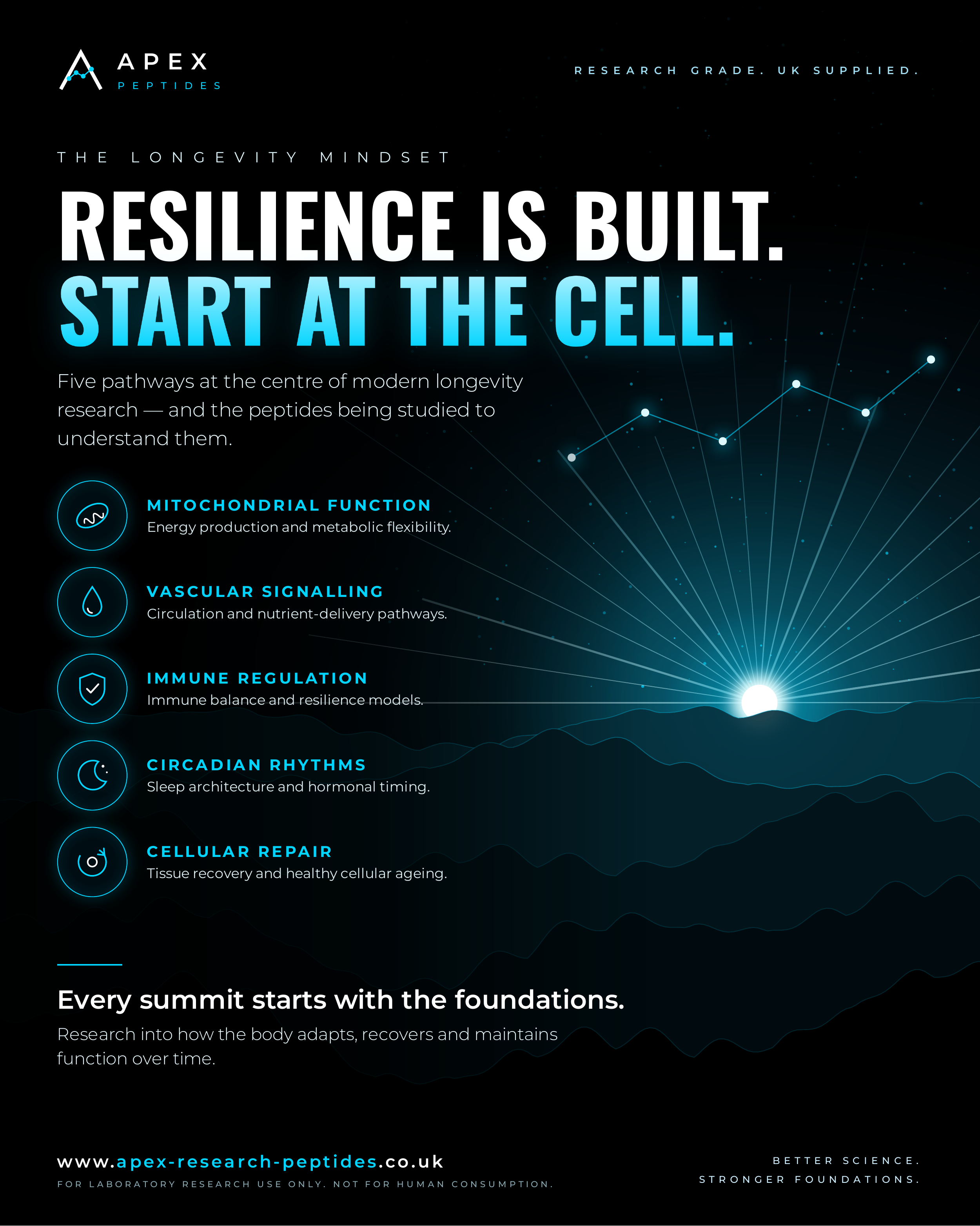
Peptides and the Future of Healthy Ageing
Imagine growing older with more years to enjoy the things you love: travelling, staying active, learning new skills and spending time with the people who matter. That ambition is helping drive interest in peptides—and their potential role in healthy ageing.
There are good reasons for optimism. The most exciting possibilities come from understanding what individual peptides can do, and building reliable evidence around their benefits.
Why are peptides getting so much attention?
Peptides are short chains of amino acids, the building blocks of proteins. Many naturally occurring peptides act as messengers, helping coordinate functions such as appetite, metabolism and hormone signalling.
Researchers are exploring whether medicines based on these signals could help address biological changes associated with ageing. Potential applications include supporting metabolic health, influencing inflammation and protecting the function of cells and tissues. Much of this longevity research remains experimental, but it offers promising directions for further study.
Healthier years are a meaningful goal
Longevity research is about both lifespan and healthspan: the years we spend in good health, with the ability to participate fully in daily life.
Peptide-based medicines already provide an encouraging example of progress in a related area. In the SELECT clinical trial, semaglutide—a medicine that mimics the peptide hormone GLP-1—reduced major cardiovascular events in people with overweight or obesity and established cardiovascular disease, without diabetes. This demonstrates a specific health benefit in a defined population; it does not establish that semaglutide slows human ageing. Read the SELECT trial.
That distinction helps explain the opportunity. Preventing serious illness can contribute to healthier later years, even before researchers establish whether a treatment affects the underlying ageing process.
A promising field with plenty left to discover
Peptides are a broad family of molecules, so each candidate needs to earn its own evidence. A benefit demonstrated for one peptide cannot automatically be applied to another.
Many compounds marketed for “anti-ageing” still lack robust human trials showing that they extend life or safely improve long-term health. For some experimental peptides, including BPC-157, the FDA has identified concerns involving immune reactions, impurities and limited safety information. FDA safety information.
The positive outlook is that careful research can turn interesting biological findings into treatments whose benefits, risks and appropriate uses are understood.
Looking ahead with optimism
Peptide research gives us a compelling reason to be curious about the future of healthy ageing. As studies improve, we may discover new ways to preserve function, reduce disease and help people stay independent for longer.
For now, peptide treatments deserve individual assessment with a qualified clinician, alongside the everyday foundations of health: movement, nourishing food, restorative sleep and meaningful connection.
The promise is an inspiring one: more opportunities to enjoy life, supported by science that keeps moving forward.
| Peptide | Potential relevance to healthy ageing | What the research actually shows |
|---|---|---|
| Semaglutide (a GLP-1 analogue) | Reducing cardiovascular disease could help preserve healthy years. | In the SELECT trial, people with overweight/obesity and existing cardiovascular disease, without diabetes, had 20% lower relative risk of major cardiovascular events: 6.5% versus 8.0% over roughly 40 months. This wasn’t a trial of slowing ageing. Human clinical trial, 2023 |
| MOTS-c | A mitochondrial peptide studied for metabolism and maintaining physical capacity with age. | Treatment improved physical performance in mice, including older mice. The study also examined natural MOTS-c responses to exercise in humans; it did not demonstrate that MOTS-c treatment extends human life. Original study, 2021 |
| Humanin / HNG | Studied for cellular stress protection and metabolic health. | Researchers reported lifespan extension in worms and improvements in metabolic and inflammatory measures in mice treated with a humanin analogue. These findings don’t establish a human longevity benefit. Original study, 2020 |
| Elamipretide (SS-31) | Targets mitochondria, the structures that produce cellular energy. | A small randomised trial in 39 older adults found a short-lived improvement in a measure of muscle mitochondrial energy capacity after one infusion. It found no significant improvement in muscle fatigue resistance and didn’t assess lifespan. Human clinical trial, 2021 |
| FOXO4-DRI | An experimental peptide designed to eliminate certain senescent cells, which can contribute to age-related tissue dysfunction. | A study reported improvements in fitness, fur density and kidney function in ageing mice. It provides early evidence for a research approach, without establishing human safety or longevity benefits. Original study, 2017 |
THE POWER OF PEPTIDES - Small Molecules. Remarkable Biological Possibilities.
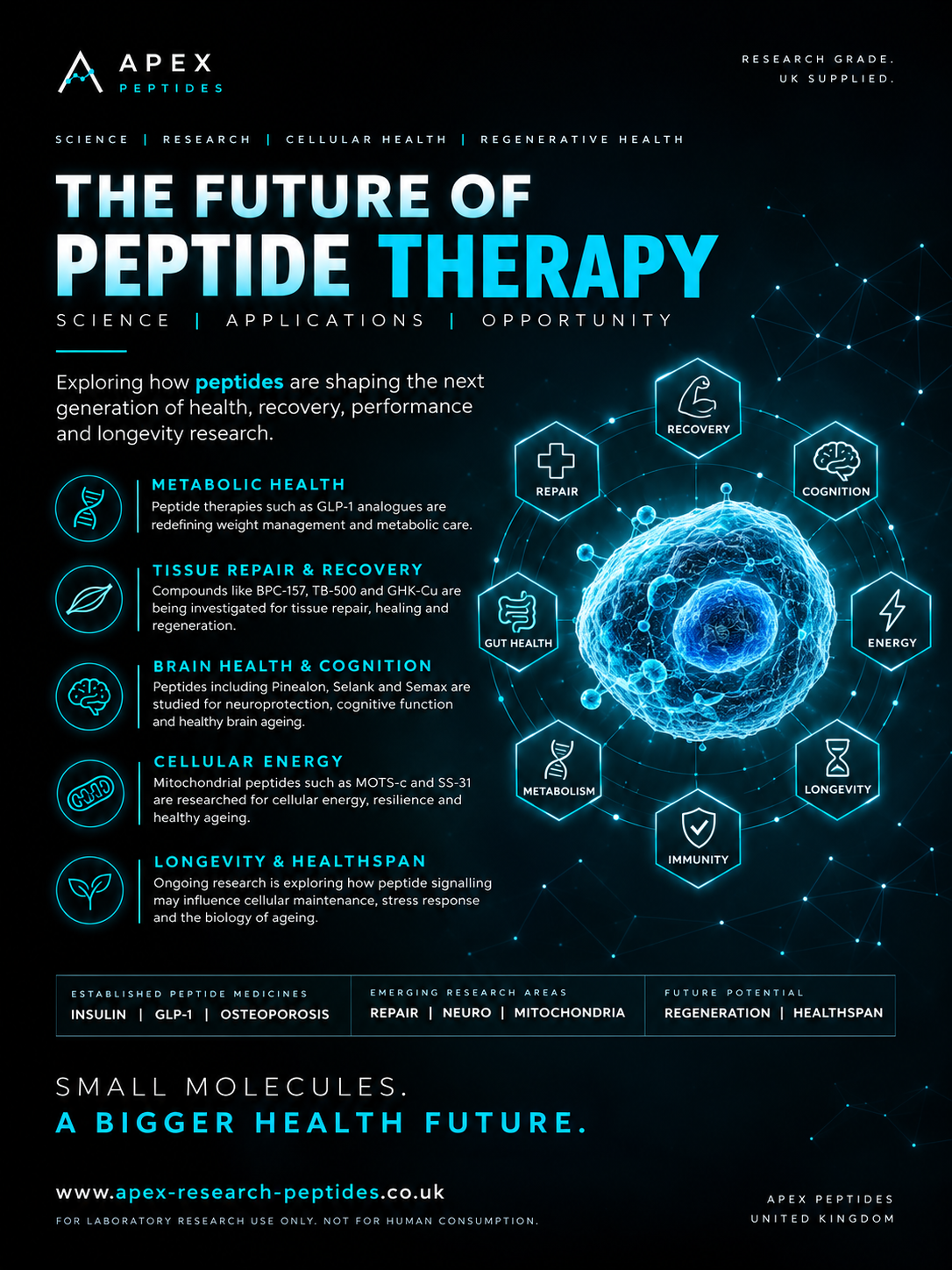
THE POWER OF PEPTIDES
Exploring the Future of Peptide Therapy, Cellular Health and Human Potential Small Molecules. Remarkable Biological Possibilities.
Modern medicine is continually evolving, and some of the most exciting developments are taking place at a remarkably small biological level.
Peptides are short chains of amino acids that play important roles in how the human body communicates, regulates and maintains itself. They are involved in processes ranging from hormone production and metabolism to immune signalling, cellular repair and neurological function.
As scientific understanding advances, researchers are increasingly investigating how peptides could be used to influence specific biological pathways and support the treatment of a wide range of health conditions.
Welcome to the fascinating world of peptide science.
At Apex-Peptides, we believe understanding the science behind these molecules is just as important as understanding the compounds themselves.
1. What Exactly Are Peptides?
Peptides are molecules made from amino acids, the same fundamental building blocks used to construct proteins.
The distinction is largely their size and structure. Peptides are generally shorter chains of amino acids, whereas proteins are typically larger and more complex.
However, their biological importance is anything but small.
The human body naturally produces thousands of different peptides, many of which act as signalling molecules.
They help cells communicate with one another and regulate important physiological functions.
Natural peptide activity is involved in:
-
Hormonal regulation and metabolism.
-
Cellular communication and signalling.
-
Immune system responses.
-
Tissue maintenance and repair.
-
Neurological activity.
-
Appetite and energy regulation.
-
Growth and development.
-
Inflammatory processes.
Scientists have recognised that these natural biological signals could provide opportunities for developing targeted therapeutic treatments.
By designing synthetic versions of naturally occurring peptides, researchers can investigate how particular receptors and biological pathways might be influenced.
This is the foundation of modern peptide therapeutics.
2. Why Is Peptide Therapy Attracting So Much Attention?
One of the most interesting characteristics of peptides is their ability to interact with specific biological targets.
Unlike compounds that may affect numerous unrelated processes, many therapeutic peptides are designed to interact with particular receptors or signalling pathways.
This offers researchers the opportunity to investigate more targeted approaches to influencing biological activity.
Peptide-based medicines are already an established part of modern healthcare.
Insulin has transformed the management of diabetes, while GLP-1 receptor agonists have introduced significant advances in metabolic medicine and weight management.
Other peptide medicines are used in areas including osteoporosis, hormonal disorders and certain cancers.
These established treatments demonstrate that peptide science is not simply a future possibility. It is already making a meaningful contribution to modern medicine.
The exciting question is where research will take the field next.
3. Metabolism, Energy and Weight Management
One of the most successful areas of peptide-based medicine is metabolic health.
The discovery and development of GLP-1-based therapies have significantly changed the treatment landscape for type 2 diabetes and obesity.
GLP-1 is a naturally occurring hormone involved in regulating blood glucose, appetite and gastric emptying.
Medicines based on this pathway can help regulate glucose levels, improve insulin responses and influence appetite.
Examples include semaglutide and liraglutide.
Research is also investigating newer multi-receptor approaches that target more than one metabolic pathway.
These developments demonstrate how understanding natural peptide signalling can lead to important medical advances.
Beyond GLP-1, researchers are investigating mitochondrial peptides and other metabolic regulators that may influence how cells produce and utilise energy.
This is an especially interesting area for future research into metabolic health and cellular ageing.
4. Tissue Repair and Regenerative Research
Another fascinating area of peptide science involves tissue repair and regeneration.
The human body possesses complex repair mechanisms involving cellular migration, blood vessel development, collagen production and tissue remodelling.
These processes are essential when recovering from injury.
Researchers are investigating whether certain peptides can influence some of these pathways.
Examples include:
BPC-157
An experimental peptide investigated in laboratory and animal studies for its potential relationship with tendon, ligament, muscle and gastrointestinal tissue repair.
TB-500 / Thymosin Beta-4
Research involving thymosin beta-4 has investigated cellular migration, actin regulation, angiogenesis and wound healing.
GHK-Cu
A naturally occurring copper-binding tripeptide investigated for its relationship with collagen production, skin remodelling, wound healing and inflammatory signalling.
These compounds represent interesting areas of regenerative research.
Although preclinical findings have generated considerable interest, further human clinical trials are needed before their therapeutic effectiveness and safety can be established.
5. Brain Health, Cognitive Function and Neuroprotection
The brain is one of the most energy-demanding organs in the human body.
Maintaining healthy neurological function involves a complex relationship between cellular energy production, antioxidant protection, neuronal communication and inflammation.
Peptide research is increasingly exploring these biological processes.
Several compounds have attracted attention:
Pinealon
An experimental tripeptide investigated for potential effects on neuronal protection, cellular regulation and biological ageing.
Selank
A synthetic peptide investigated primarily in relation to neurological signalling, anxiety-related behaviour and neurochemical regulation.
Semax
A synthetic peptide investigated for its potential neuroprotective properties and relationship with neurotrophic signalling.
SS-31 (Elamipretide)
A mitochondria-targeted peptide investigated for its ability to interact with mitochondrial membranes and support mitochondrial function.
These research areas are particularly interesting because neurological health is closely connected to cellular energy production and the body's ability to maintain healthy cells.
Although the compounds have different proposed mechanisms, they illustrate the growing interest in peptide-based approaches to neurological research.
6. Mitochondria: The Energy Behind Cellular Function
Mitochondria are often described as the powerhouses of our cells.
They play a central role in producing ATP, the primary energy currency used by cells to carry out their functions.
Mitochondrial health is important throughout the body, particularly in tissues with high energy requirements, such as the brain, heart and skeletal muscles.
Researchers are investigating several peptides that may influence mitochondrial activity.
Two particularly interesting examples are:
MOTS-c
A mitochondrial-derived peptide investigated for its potential relationship with metabolic regulation, insulin sensitivity and cellular stress responses.
SS-31 (Elamipretide)
A mitochondria-targeted peptide investigated for its potential to interact with cardiolipin and influence mitochondrial membrane function.
This field of research is particularly exciting because mitochondrial dysfunction is associated with numerous age-related and metabolic conditions.
Understanding how mitochondrial signalling works may eventually help researchers develop new approaches to treating diseases involving impaired cellular energy production.
7. Healthy Ageing and Longevity Research
Ageing is a complex biological process involving changes in DNA, cellular metabolism, mitochondrial function, protein regulation and the body's ability to maintain healthy tissues.
Scientists are increasingly investigating whether peptide signalling could influence some of these processes.
Research areas include:
-
Cellular stress responses.
-
Oxidative balance.
-
Mitochondrial function.
-
Inflammatory signalling.
-
Protein regulation.
-
Cellular maintenance.
-
Metabolic health.
Peptides such as MOTS-c, Pinealon and SS-31 have attracted interest in different aspects of this research.
It is important to distinguish research into biological ageing from proven lifespan extension.
At present, no experimental peptide has established that it can extend human lifespan.
However, understanding the biological mechanisms associated with healthy ageing represents an important opportunity for future medical research.
8. Why the Future of Peptide Science Is So Exciting
Perhaps the greatest strength of peptide research is its diversity.
Rather than being a single type of treatment, peptide therapeutics represent an entire area of pharmaceutical science.
Different peptides can interact with entirely different biological targets.
Some influence hormone receptors. Others are being investigated for their relationship with mitochondrial activity, neurological signalling, immune responses or tissue repair.
This diversity creates opportunities for developing treatments aimed at specific biological mechanisms.
There are already successful examples in mainstream medicine, and hundreds of additional peptide-based compounds are being investigated in pharmaceutical research and clinical development.
Advances in peptide engineering are also helping scientists overcome some traditional challenges, including short biological half-lives, degradation by enzymes and difficulties with drug delivery.
The future may bring increasingly sophisticated peptide medicines with improved stability, specificity and delivery methods.
The possibilities are fascinating.
9. Knowledge, Research and Responsible Peptide Science
As interest in peptides grows, it is increasingly important to distinguish between established medicines and experimental compounds.
Some peptide-based treatments have undergone extensive clinical trials and received regulatory approval for specific medical conditions.
Others remain at the laboratory or animal-research stage.
A promising laboratory result does not automatically translate into a safe or effective human treatment.
Quality, purity, stability, appropriate clinical evaluation and regulatory oversight are all essential considerations in pharmaceutical development.
At Apex-Peptides, we believe that education and scientific transparency should remain central to the discussion surrounding peptide research.
Understanding the available evidence allows people to make better-informed decisions and helps separate genuine scientific developments from exaggerated marketing claims.
CONCLUSION: A SMALL MOLECULE WITH A BIG FUTURE
Peptides represent one of the most fascinating areas of modern biomedical science.
From the established success of insulin and GLP-1 medicines to emerging research into tissue repair, mitochondrial function, neurological health and cellular ageing, their influence across biological research is substantial.
What makes peptide science so interesting is its potential to investigate highly specific biological pathways.
Researchers are no longer simply asking how to treat symptoms. They are increasingly exploring how individual cellular mechanisms work and whether they can be influenced to improve the treatment of disease.
There is still much to discover, and not every promising experimental compound will become a successful medicine.
But the scientific progress already achieved demonstrates just how important peptide research has become.
Small Molecules. Targeted Science. Expanding Possibilities.
Welcome to the future of peptide research.
APEX-PEPTIDES — Explore the Science. Understand the Research. Discover the Possibilities.
SCIENTIFIC REFERENCES & FURTHER READING
The following published research provides a starting point for exploring peptide therapeutics and their expanding applications.
1. Recent Advances in the Development of Therapeutic Peptides (2023)
Trends in Pharmacological Sciences.
A comprehensive review of modern peptide development, molecular engineering and therapeutic applications.
https://pmc.ncbi.nlm.nih.gov/articles/PMC10330351/
2. Peptide Drugs: Current Status and Its Applications in the Treatment of Various Diseases (2024)
Current Drug Research Reviews.
Explores peptide medicines and their applications across diabetes, cancer, osteoporosis and other medical conditions.
https://pubmed.ncbi.nlm.nih.gov/38638039/
3. Recent Advances in Peptide-Based Therapies for Obesity and Type 2 Diabetes (2024)
Peptides.
Reviews the development of incretin-based therapies and their growing importance in metabolic medicine.
https://pubmed.ncbi.nlm.nih.gov/38184193/
4. Therapeutic Peptides: Recent Advances in Discovery, Synthesis, and Clinical Translation (2025)
An exploration of peptide discovery, molecular design and the challenges of translating research into clinical treatments.
https://pmc.ncbi.nlm.nih.gov/articles/PMC12154100/
5. Therapeutic Peptides in Aesthetic, Metabolic and Endocrine Conditions: Effects, Safety, Clinical Applications, and Future Perspectives (2026)
International Journal of Molecular Sciences.
A broad review examining established and experimental peptides, their proposed mechanisms, clinical evidence and regulatory status.
https://pmc.ncbi.nlm.nih.gov/articles/PMC13164565/
6. Injectable Peptide Therapy: A Primer for Orthopaedic and Sports Medicine Physicians (2026)
American Journal of Sports Medicine.
An important review examining the evidence and limitations surrounding popular injectable peptides in sports medicine and regenerative research.
https://pubmed.ncbi.nlm.nih.gov/41476424/
7. Peptides in Regenerative Medicine: A Comprehensive Review of Clinical Applications in Tissue Repair and Chronic Pain Management (2026)
Current Pain and Headache Reports.
Examines regenerative peptide research, including BPC-157, thymosin beta-4 and GHK-Cu, while discussing the limitations of current clinical evidence.
https://pubmed.ncbi.nlm.nih.gov/42635865/
IMPORTANT RESEARCH DISCLAIMER
This article is intended for educational and scientific information purposes only. Peptides differ considerably in their evidence base, regulatory status and safety profiles. Some are approved prescription medicines for specific indications, while many discussed in experimental research remain unapproved for human therapeutic use. Research findings, particularly those from animal and laboratory studies, should not be interpreted as proof of clinical effectiveness or safety. Nothing in this article constitutes medical advice or a recommendation to use any particular peptide.
The Bright Evolution of Peptides
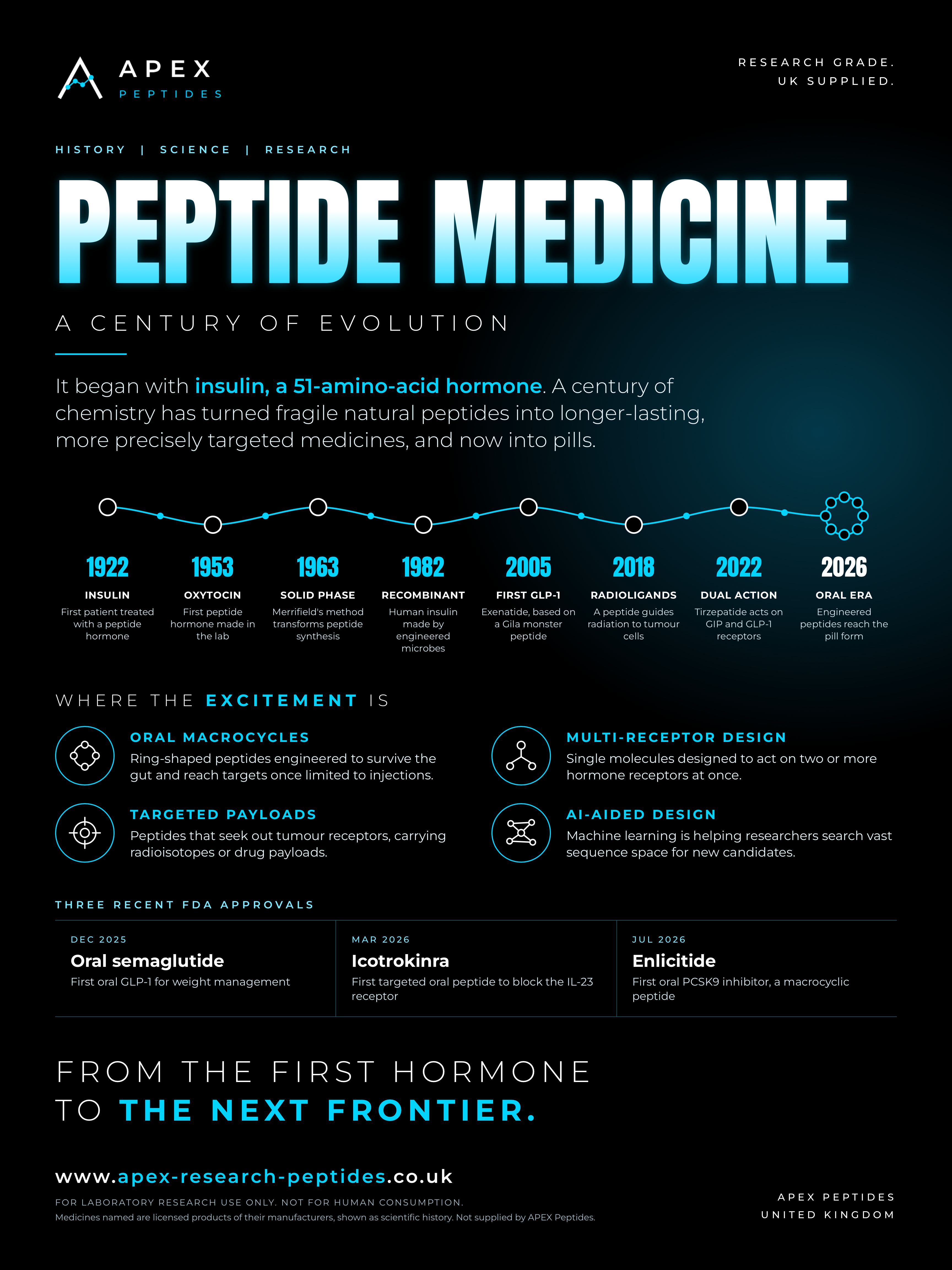
From Discovery to Tomorrow: The Bright Evolution of Peptides
Small chains of amino acids have helped transform medicine—and they may open up even more possibilities in the years ahead.
Peptides are small chains of amino acids, the same building blocks that make up proteins. In the body, they act as messengers and signals, helping cells coordinate important tasks. For more than a century, scientists have been learning how to find, understand and shape these molecules into useful medicines.
A life-changing beginning
One of the most important early chapters began with insulin. In the 1920s, researchers developed insulin treatments that turned type 1 diabetes from a usually fatal illness into a condition people could live with. Studying insulin also helped scientists answer bigger questions about how hormones work and how the body makes complex molecules. A history of insulin
For a while, making peptides in the laboratory was painstaking work. That began to change when Vincent du Vigneaud and his colleagues synthesized oxytocin, a hormone made of just nine amino acids. Later, chemist Bruce Merrifield developed a more practical way to build peptides one amino acid at a time while they were attached to a solid support. The method helped make peptide research faster and more systematic, and earned Merrifield the 1984 Nobel Prize in Chemistry. Rockefeller University on Merrifield’s work, Nobel Prize
From natural signals to designed medicines
As scientists learned more about peptides, they began adapting them to do specific jobs. Small changes to a peptide’s structure can affect how strongly it binds to a target, how long it stays active, or how the body absorbs it. This has helped researchers turn insights from biology into treatments.
A well-known example is the family of medicines inspired by GLP-1, a peptide involved in blood-sugar regulation. Semaglutide tablets show how far peptide medicine has come: with a formulation designed to help the medicine absorb through the stomach, a peptide can be taken by mouth rather than only by injection. FDA prescribing information for oral semaglutide
Peptides are also being explored across a wider range of research areas, including cancer, infectious disease and immune disorders. Their ability to interact with biological targets makes them an appealing starting point for researchers looking for more precise ways to influence processes in the body. Review of peptide and protein drug delivery
What could come next?
The next phase may bring together peptide chemistry, improved delivery methods and computational tools. Researchers are exploring ways to design new sequences, test promising candidates more efficiently, and create peptides that last longer or reach tissues that have been difficult to target.
These are active areas of research, not guaranteed breakthroughs. Peptides can be challenging to deliver because the body may break them down, and a promising result in a lab still needs careful testing for safety and effectiveness in people. Better design and delivery could help address some of those challenges, but each potential medicine must earn its place through evidence.
A hopeful story still being written
The story of peptides is a story of patient scientific progress: first recognizing the body’s own chemical messengers, then learning to make and measure them, and finally developing medicines based on what they can do.
From insulin’s early promise to today’s engineered treatments, peptides have shown how understanding life at a small scale can lead to meaningful advances. The future may bring more discoveries—and the most encouraging prospect is that researchers now have far better tools to explore them.
Editorial note: “Peptide” covers a broad range of molecules and products. A peptide being discussed or sold does not by itself mean it has been proven safe or effective for a particular use; medicines require appropriate clinical evidence and regulatory review.
7:38
Why 1 + 1 Could Be Greater Than 2: The Science Behind Combining BPC-157 and TB-500 Two Peptides. Different Mechanisms. One Fascinating Research Direction.
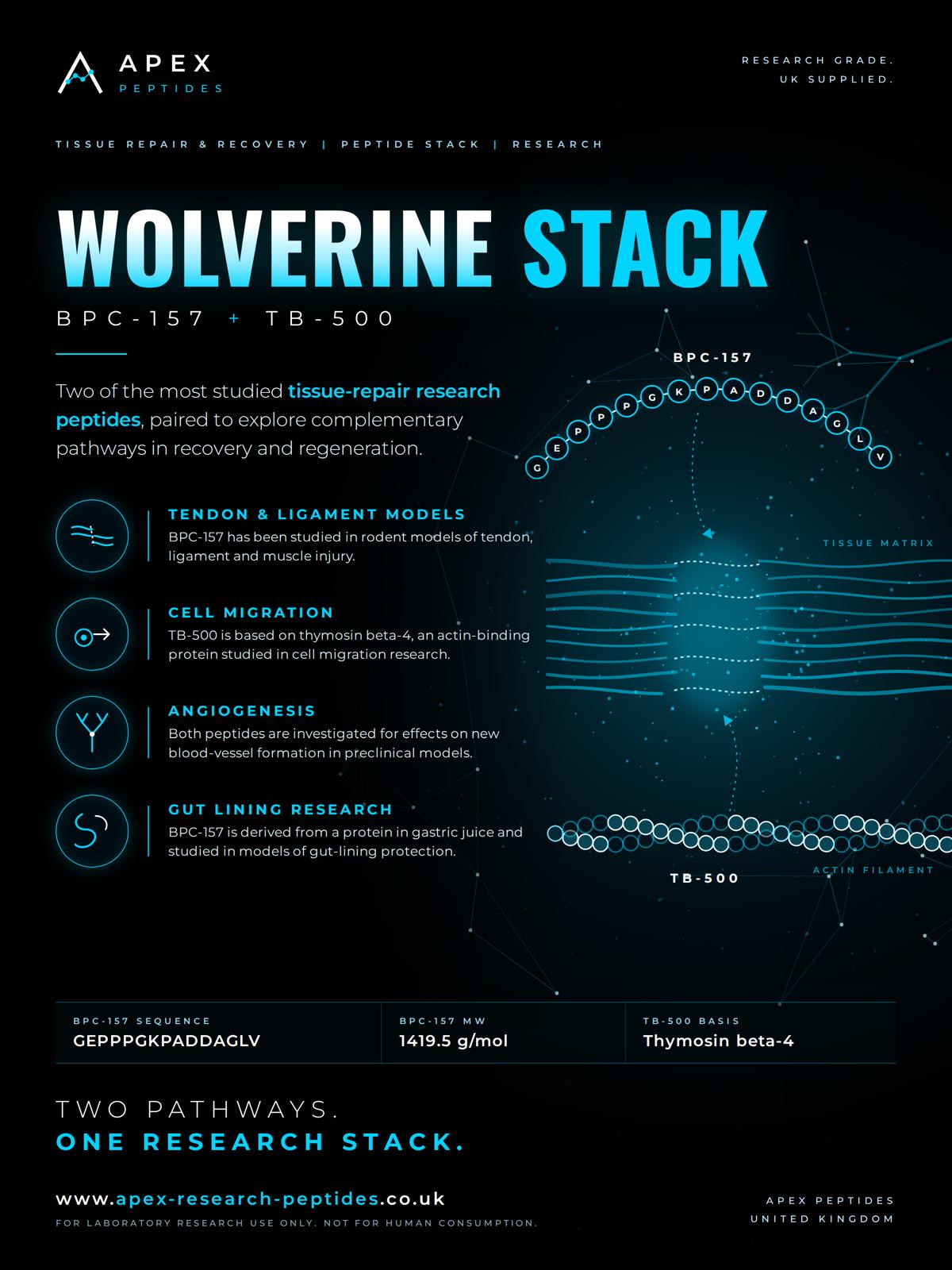
THE WOLVERINE STACK
The human body is remarkably capable of repairing itself. From microscopic cellular damage to complex injuries involving muscles, tendons and ligaments, our bodies possess an intricate network of biological processes designed to restore damaged tissue.
But what happens when two different biological compounds, each investigated for its potential role in tissue repair, are brought together?
This is the thinking behind the increasingly popular combination known as the Wolverine Stack, bringing together two research peptides: BPC-157 and TB-500.
Inspired by the extraordinary regenerative abilities of Marvel's Wolverine, the name reflects the central interest behind this combination: exploring how different biological pathways might work together to support the body's natural repair processes.
And this brings us to an interesting scientific concept:
Why might 1 + 1 be greater than 2?
1. Understanding BPC-157: Supporting the Repair Process
BPC-157 (Body Protection Compound-157) is a synthetic pentadecapeptide consisting of 15 amino acids.
It has attracted considerable scientific interest because of its potential involvement in several biological processes associated with tissue repair.
Preclinical research has investigated its relationship with:
-
Angiogenesis – the formation of new blood vessels.
-
Fibroblast activity – cells responsible for producing connective tissue.
-
Collagen formation and organisation.
-
Cellular survival and regeneration pathways.
-
Inflammatory signalling.
-
Tendon, ligament and muscle repair.
One particularly interesting area is angiogenesis.
Tendons and ligaments have relatively limited blood supplies compared with many other tissues. This can make their natural repair processes particularly challenging.
Research investigating BPC-157 suggests that it may influence pathways involved in vascular development, potentially helping create an environment more favourable to tissue repair.
Its interaction with growth-related signalling pathways, including VEGF-related activity, has also attracted scientific attention.
The potential significance is that tissue repair is not simply about producing new cells. It also involves supplying those cells with the resources necessary to function.
BPC-157 is therefore particularly interesting from the perspective of cellular repair and tissue regeneration.
2. Understanding TB-500: Cellular Movement and Tissue Remodelling
TB-500 is commonly associated with thymosin beta-4, a naturally occurring peptide involved in cellular processes.
Thymosin beta-4 has been investigated extensively for its potential involvement in:
-
Cellular migration.
-
Actin regulation.
-
Angiogenesis.
-
Inflammatory responses.
-
Wound healing.
-
Tissue remodelling.
One of its most interesting biological relationships involves actin.
Actin is a fundamental protein within the cellular structure. It plays an important role in maintaining cell shape, movement and organisation.
Cell migration is an essential part of tissue repair.
When tissue becomes damaged, specialised cells must move towards the affected area and participate in the repair process.
Thymosin beta-4 has been investigated for its ability to influence these processes, making it particularly interesting in regenerative medicine research.
Studies involving full-length thymosin beta-4 have also investigated wound healing in human subjects.
It is important to distinguish these studies from research on commercially marketed TB-500 preparations, as the precise peptide forms are not necessarily identical.
Nevertheless, the underlying biological research provides an interesting foundation for further investigation.
3. Why Combine Them? The Theory Behind 1 + 1 > 2
This is where things become particularly interesting.
BPC-157 and TB-500 have been investigated in relation to different, although potentially overlapping, biological pathways.
Consider the following:
BPC-157
-
Investigated for its relationship with blood vessel formation.
-
Associated with fibroblast activity.
-
Studied in tendon and ligament repair models.
-
Investigated for effects on cellular survival and inflammatory signalling.
TB-500 / Thymosin Beta-4
-
Investigated for cellular migration.
-
Associated with actin regulation.
-
Studied in wound healing.
-
Investigated for angiogenesis and tissue remodelling.
The theory behind combining them is straightforward.
Tissue repair is not a single biological event. It involves multiple processes working together.
New blood vessels, cellular migration, collagen production, inflammatory regulation and tissue remodelling all contribute to the overall repair process.
If two compounds influence complementary parts of this complex biological network, combining them could potentially produce a broader biological effect than investigating either pathway independently.
This is the principle of synergy.
One compound may influence one part of the repair process, while the other may influence another.
Rather than focusing on a single biological mechanism, the combination explores several interconnected processes.
This is why the concept of 1 + 1 being greater than 2 is so interesting.
However, an important distinction must be made: complementary mechanisms create a scientific rationale for studying a combination, but they do not automatically demonstrate that the combination is more effective.
4. What Does the Scientific Research Actually Show?
There is encouraging preclinical research surrounding both compounds individually.
A systematic review published in 2025 examined the use of BPC-157 in orthopaedic and sports medicine.
The researchers identified positive findings across several animal models involving:
-
Tendon injuries.
-
Ligament injuries.
-
Muscle injuries.
-
Bone healing.
The review discussed several potential biological mechanisms, including angiogenesis, cellular proliferation and inflammatory regulation.
Another area of interest is thymosin beta-4.
A Phase 2 clinical study involving 73 patients investigated topical thymosin beta-4 for venous leg ulcers.
The researchers reported encouraging findings relating to wound healing and tolerability.
These studies help explain why researchers remain interested in the individual compounds.
But what about the combination?
An important development came in July 2026.
A published experimental study investigated BPC-157, TB-500 and their combination in a rat Achilles tendon repair model.
The researchers examined biomechanical strength, tendon structure and collagen organisation.
Both individual compounds demonstrated encouraging findings in selected measurements.
However, the combination did not demonstrate additional benefits over the individual treatments.
This is an important result because it highlights that biological synergy cannot simply be assumed.
Further research is needed to establish whether different models, treatment conditions or biological outcomes might produce different results.
It also demonstrates why controlled combination studies are so important.
5. The Bigger Picture: Regenerative Research
Perhaps the most interesting aspect of the Wolverine concept is that it reflects a wider direction in biological research.
Modern regenerative medicine increasingly recognises that tissue repair involves multiple interconnected pathways.
Rather than concentrating on one isolated process, researchers are investigating how different biological signals interact.
This is particularly relevant when considering tissues such as tendons, ligaments and skeletal muscle, where successful repair involves much more than simply reducing inflammation.
The relationship between cellular migration, vascular development, collagen organisation and tissue remodelling remains an important area of investigation.
The Wolverine combination brings together two peptides that have attracted attention within these research areas.
It is this potential for complementary biological activity that makes the combination scientifically interesting.
6. Why the Wolverine Stack Continues to Attract Attention
The appeal of BPC-157 and TB-500 together is understandable.
Each compound has its own body of preclinical research, with different proposed mechanisms and areas of biological interest.
Combining them raises an important research question:
Could targeting several interconnected repair pathways provide advantages over targeting individual pathways?
It is a question worth investigating.
However, neither the combination nor either compound has established clinical efficacy and safety for human musculoskeletal injury treatment. High-quality human trials are still needed.
The Wolverine concept should therefore be viewed as an interesting area of experimental peptide research rather than an established regenerative treatment.
CONCLUSION: THE POWER OF COMPLEMENTARY SCIENCE
The Wolverine Stack represents an interesting example of how researchers can explore the relationship between different biological mechanisms.
BPC-157 has attracted attention for its potential involvement in cellular repair, vascular development and connective tissue research.
TB-500, associated with thymosin beta-4 biology, has attracted attention for its relationship with cellular migration, actin regulation and tissue remodelling.
Individually, both compounds have generated scientific interest.
Together, they raise an even bigger question.
Can two different biological mechanisms work together to produce something greater than either could achieve alone?
That is the thinking behind 1 + 1 being greater than 2.
The theory is fascinating. The early research provides reasons to investigate further. But proving synergy requires considerably more scientific work.
And that is precisely what makes regenerative peptide research such an interesting field to follow.
Wolverine: Two Peptides. Complementary Pathways. One Fascinating Area of Scientific Research.
SCIENTIFIC REFERENCES & FURTHER READING
1. BPC-157 and musculoskeletal soft tissue healing
Gastric pentadecapeptide body protection compound BPC 157 and its role in accelerating musculoskeletal soft tissue healing.
2019 – Journal of Orthopaedic Research.
https://pubmed.ncbi.nlm.nih.gov/30915550/
2. Emerging Use of BPC-157 in Orthopaedic Sports Medicine: A Systematic Review
2025 – Orthopaedic Journal of Sports Medicine.
https://pmc.ncbi.nlm.nih.gov/articles/PMC12313605/
3. The Effect of Thymosin Treatment of Venous Ulcers
2010 – Wound Repair and Regeneration.
A Phase 2 clinical study investigating topical thymosin beta-4 in patients with venous ulcers.
https://pubmed.ncbi.nlm.nih.gov/20536470/
4. Effects of BPC-157 and TB-500 on Achilles Tendon Healing in Rats: A Histopathological and Biomechanical Study
2026 – Joint Diseases and Related Surgery.
An experimental study comparing BPC-157, TB-500 and their combination in an Achilles tendon injury model.
https://pubmed.ncbi.nlm.nih.gov/42542926/
5. Human Evidence for BPC-157 in Orthopaedic and Regenerative Medicine: A Systematic Review of Efficacy and Safety
2026 – Acta Orthopaedica Belgica.
A systematic assessment of the limited available human evidence.
https://pubmed.ncbi.nlm.nih.gov/42885452/
Research disclaimer: BPC-157 and TB-500 are investigational compounds and are not licensed medicines for human use in the UK.
TB-500: Exploring the Science of Tissue Repair, Regeneration and Cellular Recovery
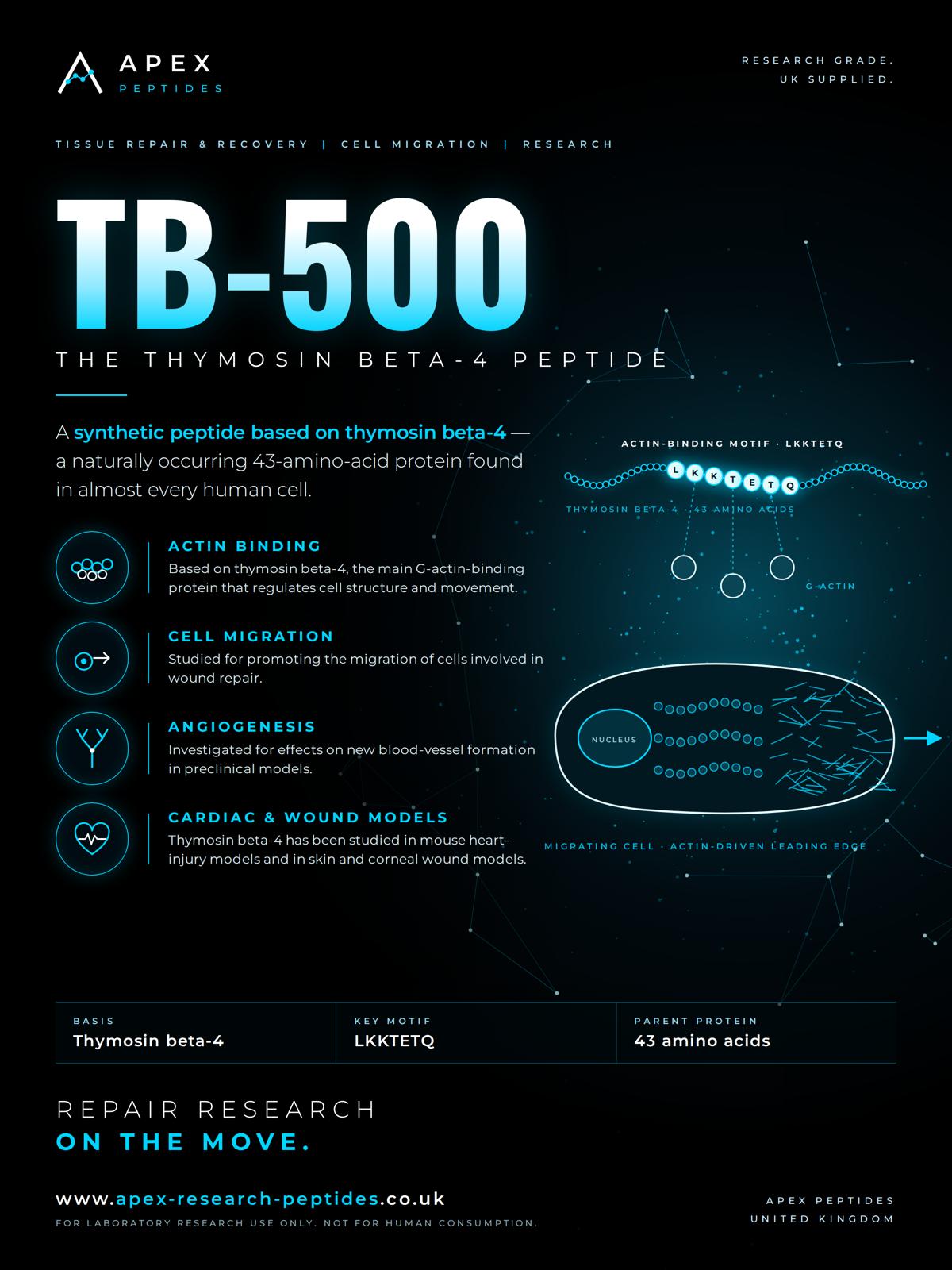
Introduction: What is TB-500?
TB-500 is a synthetic peptide commonly associated with thymosin beta-4 (Tβ4), a naturally occurring protein found throughout the human body.
Thymosin beta-4 has attracted considerable scientific attention because of its involvement in several biological processes associated with tissue maintenance, cellular movement, blood vessel formation and wound repair.
TB-500 is commonly described as a synthetic, N-acetylated seven-amino-acid fragment of thymosin beta-4. Its sequence is based on a region associated with the actin-binding activity of the parent molecule.
Actin is an essential structural protein within cells. It plays an important role in cellular movement, structural organisation and tissue development.
The relationship between thymosin beta-4, actin and cellular repair has made this family of peptides an interesting subject in regenerative medicine.
Research has explored several potentially important biological mechanisms, including:
-
Cellular migration and tissue repair.
-
Angiogenesis and blood vessel formation.
-
Fibroblast activity and connective tissue development.
-
Inflammatory signalling.
-
Wound healing and tissue regeneration.
-
Cellular protection and tissue maintenance.
Although the research is promising, an important distinction must be made: much of the published evidence concerns full-length thymosin beta-4 rather than the specific TB-500 fragment marketed commercially.
1. Cellular Migration: Helping Cells Move Where They Are Needed
One of the most interesting properties of thymosin beta-4 is its relationship with actin, a protein responsible for maintaining cellular structure and supporting cell movement.
Cellular migration is an essential part of the body's natural repair processes.
When tissue becomes damaged, specialised cells need to move towards the affected area to participate in repair and regeneration.
These include fibroblasts, endothelial cells and epithelial cells.
Thymosin beta-4 has been investigated for its ability to influence cellular migration.
A significant 1997 study published in the Journal of Cell Science demonstrated that thymosin beta-4 stimulated directional migration of human endothelial cells.
Researchers observed increased migration in laboratory experiments, suggesting that thymosin beta-4 may influence the cellular processes involved in blood vessel development and tissue repair.
This relationship between actin regulation and cellular movement remains one of the most interesting aspects of thymosin beta-4 research.
2. Angiogenesis: The Importance of Blood Vessel Formation
Angiogenesis is the biological process through which new blood vessels develop from existing ones.
It is a fundamental component of tissue repair because blood vessels deliver oxygen and nutrients required by regenerating tissues.
Thymosin beta-4 has been investigated extensively for its potential involvement in angiogenesis.
Research published in The FASEB Journal in 2003 investigated the actin-binding region of thymosin beta-4.
Researchers identified a seven-amino-acid sequence associated with its angiogenic activity.
The study demonstrated that this region could promote endothelial cell migration and blood vessel sprouting in experimental models.
This is particularly interesting because the region investigated is closely associated with the sequence used in commercially marketed TB-500.
However, activity demonstrated by a synthetic fragment in laboratory experiments does not establish that an administered TB-500 product produces the same effects in humans.
The findings nevertheless provide an important foundation for further investigation into peptide-based regenerative research.
3. Wound Healing and Tissue Regeneration
One of the most extensively researched areas involving thymosin beta-4 is wound healing.
A landmark 1999 study published in the Journal of Investigative Dermatology investigated the effects of thymosin beta-4 in a rat model of full-thickness skin wounds.
Researchers reported several encouraging findings:
-
Increased re-epithelialisation.
-
Greater collagen deposition.
-
Increased angiogenesis.
-
Improved wound contraction.
-
Enhanced keratinocyte migration.
The researchers observed that treated wounds demonstrated improved healing measures compared with control groups.
This research helped establish thymosin beta-4 as an important molecule for investigating the biological mechanisms involved in tissue repair.
Further research in 2003 examined thymosin beta-4 and a synthetic peptide containing its actin-binding region in diabetic and aged mice.
The study reported encouraging wound-repair findings in both models.
This is particularly interesting because wound healing can become less efficient in certain conditions associated with ageing and metabolic dysfunction.
These studies provide a compelling scientific basis for continued investigation of thymosin beta-4-related peptides.
4. Fibroblasts and Connective Tissue Development
Fibroblasts are specialised cells that play an important role in maintaining and repairing connective tissue.
They produce and organise extracellular matrix components, including collagen, which provides structural support to skin, tendons, ligaments and other tissues.
During normal tissue repair, fibroblasts migrate into damaged areas and contribute to the rebuilding of the extracellular matrix.
Thymosin beta-4 has been investigated for its potential influence on fibroblast migration and activity.
Its interaction with actin is particularly relevant because the actin cytoskeleton helps regulate the movement and structural organisation of cells.
Research into these processes may help improve our understanding of how peptides influence the biological environment involved in tissue regeneration.
This is an important area for future research into connective tissue biology.
5. Inflammation and the Natural Repair Process
Inflammation is an essential component of the body's response to tissue injury.
It helps initiate the repair process by coordinating immune cells, signalling molecules and specialised repair mechanisms.
However, the inflammatory response needs to be carefully regulated.
Thymosin beta-4 has been investigated for its potential influence on inflammatory signalling and cellular protection.
Experimental research suggests that it may influence several biological pathways associated with inflammation, cell migration and tissue maintenance.
These interactions are particularly interesting because inflammation, angiogenesis and cellular regeneration are closely connected.
Rather than viewing tissue repair as a single event, researchers increasingly recognise it as a coordinated process involving multiple cellular systems.
Understanding how thymosin beta-4 and related peptide fragments interact with these systems could contribute to future developments in regenerative science.
6. Research into Muscle, Tendon and Ligament Health
Muscles, tendons and ligaments are structurally different tissues, but all depend on coordinated cellular activity to maintain their integrity.
Tendons connect muscles to bones, while ligaments provide stability between bones at joints.
Both contain specialised connective tissue structures that can be challenging to repair following injury.
Thymosin beta-4 has generated interest in musculoskeletal research because of its involvement in cellular migration, actin regulation and tissue-repair signalling.
Researchers have investigated its biological activity in several experimental models involving:
-
Skeletal muscle tissue.
-
Tendon-related repair processes.
-
Ligament biology.
-
Connective tissue development.
-
Vascular support of damaged tissue.
However, the evidence is not evenly distributed.
Most of the encouraging findings come from full-length thymosin beta-4 research, laboratory experiments and animal models.
Direct evidence for TB-500 itself in human tendon, ligament and muscle recovery remains extremely limited.
This makes further controlled research an important priority.
7. What Does the Scientific Evidence Actually Tell Us?
The scientific interest in TB-500 comes largely from the biological activity associated with thymosin beta-4 and its actin-binding region.
A 2026 scoping review published in Applied Sciences examined 80 studies involving thymosin beta-4 and TB-500-related research.
The authors identified several important areas of investigation, including wound healing, angiogenesis, vascular biology and tissue regeneration.
However, they also identified a significant evidence gap: most of the literature involved thymosin beta-4 rather than TB-500 itself.
The review found that direct TB-500 evidence was very limited and that human research specifically addressing musculoskeletal applications was lacking.
Key areas of scientific interest
Cellular migration: Research has demonstrated that thymosin beta-4 can influence the movement of specialised cells involved in tissue repair.
Angiogenesis: Experimental studies have identified activity involving endothelial cells and new blood vessel formation.
Wound healing: Animal studies have reported improvements in several measures of skin wound repair.
Collagen and connective tissue: Research has investigated the relationship between thymosin beta-4, fibroblasts and extracellular matrix development.
Inflammatory signalling: Experimental findings suggest interactions with pathways involved in cellular protection and inflammation.
What remains to be established?
Further research is required to determine:
-
Whether TB-500 produces the same biological effects as full-length thymosin beta-4.
-
Its safety profile in humans.
-
Its pharmacokinetics and metabolism.
-
Whether it has meaningful applications in musculoskeletal recovery.
-
Its long-term effects.
The FDA has specifically highlighted insufficient human exposure and safety information for the TB-500 fragment, including potential immunogenicity and peptide impurity concerns.
Consequently, TB-500 remains an investigational compound rather than an established medical treatment.
Conclusion: Why TB-500 Remains an Interesting Area of Peptide Research
TB-500 has attracted considerable attention because it is associated with one of the more interesting areas of regenerative biology: the relationship between actin regulation, cellular migration and tissue repair.
Research involving thymosin beta-4 has demonstrated encouraging findings in experimental models of wound healing, angiogenesis and cellular regeneration.
Its seven-amino-acid actin-binding region has also provided researchers with an opportunity to investigate whether smaller synthetic peptide fragments can reproduce selected biological activities of the parent molecule.
Although the clinical potential of TB-500 remains to be established, the underlying science provides an interesting foundation for further research.
The growing interest in regenerative medicine, connective tissue biology and cellular repair means that thymosin beta-4 and its related peptides are likely to remain important subjects of scientific investigation.
Understanding how cells move, communicate and rebuild damaged tissue could be an important part of the future of regenerative medicine. TB-500 is one of the peptides attracting attention in this developing field.
Scientific Disclaimer
This article is provided for educational and scientific research purposes only. TB-500 is an investigational peptide and is not an approved human medicine.
Scientific references – original research and reviews
These links provide access to the scientific publications behind the article.
1. Cellular migration – 1997
Thymosin beta 4 stimulates directional migration of human umbilical vein endothelial cells.
Journal of Cell Science.
Investigates the relationship between thymosin beta-4, endothelial cell migration and angiogenesis.
Read original research – PubMed
2. Wound healing – 1999
Malinda et al. (1999). Thymosin beta4 accelerates wound healing.
Journal of Investigative Dermatology.
A landmark study examining wound closure, collagen deposition, angiogenesis and cellular migration.
Read original research – PubMed
3. Synthetic peptide fragment and wound repair – 2003
Philp et al. (2003). Thymosin beta 4 and a synthetic peptide containing its actin-binding domain promote dermal wound repair in db/db diabetic mice and in aged mice.
Wound Repair and Regeneration.
Particularly relevant because it investigates a synthetic peptide containing the actin-binding region.
Read original research – PubMed
4. Actin-binding region and angiogenesis – 2003
Philp et al. (2003). The actin binding site on thymosin beta4 promotes angiogenesis.
The FASEB Journal.
Investigates the seven-amino-acid actin-binding region and its involvement in endothelial migration and angiogenesis.
Read original research – PubMed
5. Angiogenesis and tissue regeneration – 2004
Philp, Goldstein & Kleinman (2004). Thymosin beta4 promotes angiogenesis, wound healing, and hair follicle development.
Mechanisms of Ageing and Development.
Explores the relationship between thymosin beta-4, blood vessel formation and tissue regeneration.
Read original research – PubMed
6. Burn wound healing – 2017
Kim & Kwon (2017). Thymosin β4 has a major role in dermal burn wound healing that involves actin cytoskeletal remodelling via heat-shock protein 70.
Journal of Tissue Engineering and Regenerative Medicine.
Investigates cellular mechanisms involved in wound closure and vascularisation.
Read original research – PubMed
7. Comprehensive TB-500 and thymosin beta-4 review – 2026
McGuire et al. (2026). Thymosin Beta-4 and TB-500 in Tissue Healing, Regeneration, and Musculoskeletal Repair: A Scoping Review.
Applied Sciences, 16(12), 6202.
A particularly useful modern review examining the differences between the evidence for thymosin beta-4 and TB-500.
8. Sports medicine and peptide research – 2026
Tewari et al. (2026). Peptide Supplements and Their Therapeutic Applications in Sports Medicine.
American Journal of Sports Medicine.
Examines the evidence for several emerging peptides, including TB-500, in musculoskeletal research.
9. FDA safety assessment – 2026
US Food and Drug Administration. TB-500 (Thymosin Beta-4 Fragment) – Pharmacy Compounding Advisory Committee briefing document.
Reviews the available evidence and identifies gaps in human exposure and safety data.
SS-31 (Elamipretide): The Mitochondrial Peptide Exploring Cellular Energy, Mitochondrial Health and Healthy Ageing
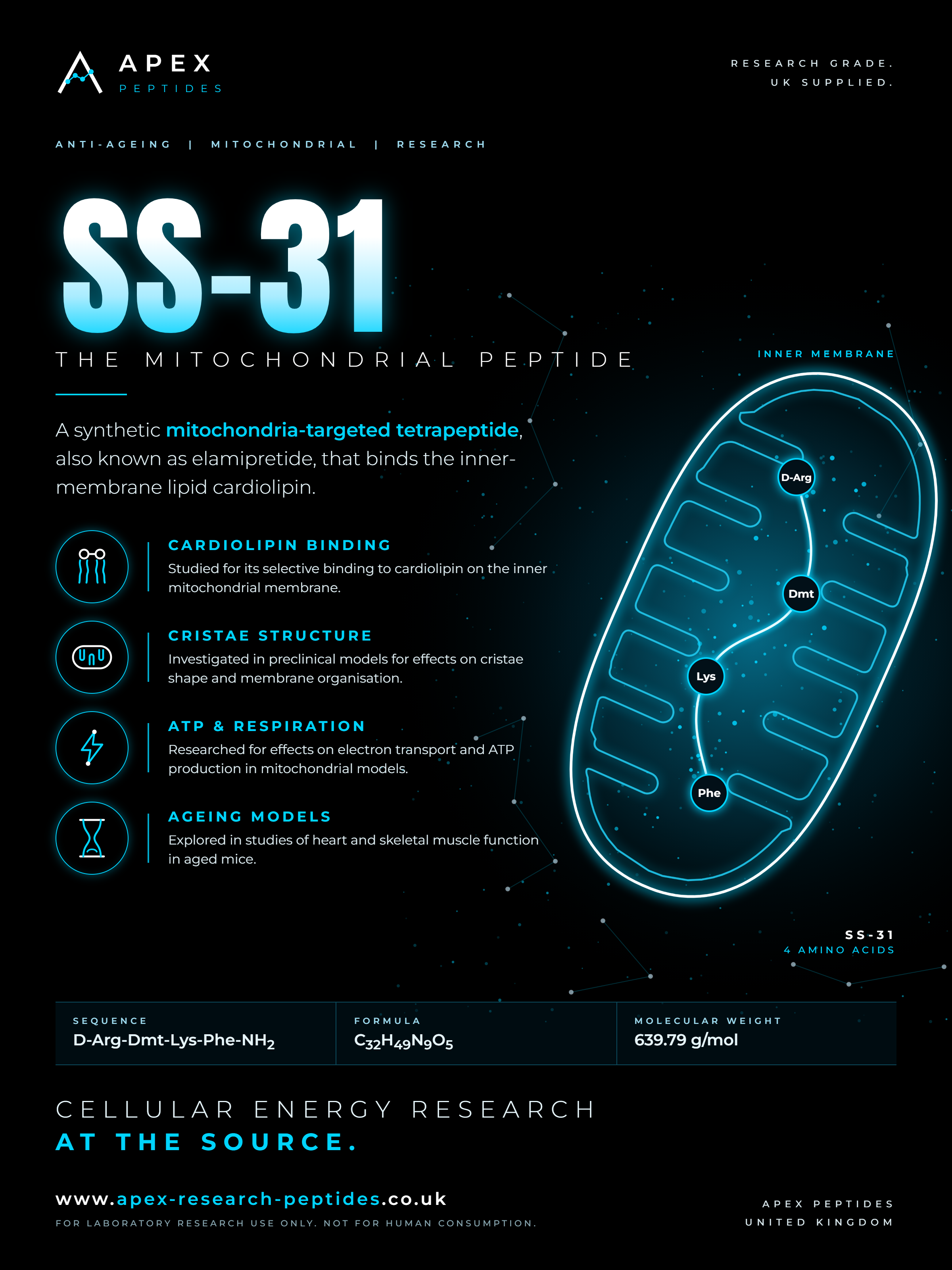
Introduction: What is SS-31?
SS-31, also known as Elamipretide, MTP-131 and Bendavia, is a synthetic mitochondria-targeting tetrapeptide that has become an important subject of research in mitochondrial biology and cellular energy production.
Unlike many peptides that interact with receptors on the surface of cells, SS-31 is particularly interesting because it is designed to reach the mitochondria themselves.
Mitochondria are responsible for producing much of the energy required to maintain normal cellular activity. They generate adenosine triphosphate (ATP), the primary energy currency used by cells throughout the body.
As we age, mitochondrial function can become less efficient. Changes in mitochondrial structure, oxidative stress and energy production have been associated with a range of age-related biological processes.
SS-31 has attracted scientific interest because of its interaction with cardiolipin, an important phospholipid within the inner mitochondrial membrane.
Research suggests that this interaction may help support mitochondrial membrane structure, improve cellular bioenergetics and reduce excessive production of reactive oxygen species.
These properties make SS-31 particularly interesting in the fields of mitochondrial health, cardiovascular research, muscle function and cellular ageing.
1. Mitochondrial Function and Cellular Energy Production
One of the most exciting aspects of SS-31 research is its potential to influence mitochondrial energy production.
Mitochondria contain an intricate internal membrane system known as the inner mitochondrial membrane.
This membrane houses important components of the electron transport chain, which are responsible for generating the electrochemical gradient required for ATP synthesis.
SS-31 interacts with cardiolipin, a specialised lipid that helps maintain the structure and organisation of the inner mitochondrial membrane.
By interacting with cardiolipin, research suggests SS-31 may help maintain the organisation of mitochondrial membrane proteins and support efficient energy production.
Experimental studies have reported:
-
Improvements in mitochondrial bioenergetics.
-
Increased ATP production under certain conditions.
-
Improved electron transport chain function.
-
Better mitochondrial membrane organisation.
-
Reduced mitochondrial oxidative stress.
This is particularly interesting because mitochondrial efficiency is fundamental to the energy requirements of virtually every tissue in the body.
2. Cardiolipin: The Key to SS-31's Mechanism
To understand why SS-31 is generating so much scientific interest, it is important to understand cardiolipin.
Cardiolipin is a specialised phospholipid found predominantly in the inner mitochondrial membrane.
It plays an essential role in maintaining mitochondrial architecture and supporting the proteins involved in energy production.
It is particularly important for maintaining the structure of mitochondrial cristae, the folds within the inner membrane that provide the surface area required for energy-generating processes.
When mitochondrial function becomes disrupted, cardiolipin organisation can also be affected.
SS-31 is particularly interesting because it binds selectively and reversibly to cardiolipin.
Research suggests that this interaction may help:
-
Stabilise mitochondrial membrane structure.
-
Support mitochondrial cristae organisation.
-
Maintain the function of respiratory chain proteins.
-
Improve mitochondrial bioenergetics.
-
Reduce excessive mitochondrial reactive oxygen species production.
Rather than acting simply as a conventional antioxidant, SS-31 appears to influence the underlying mitochondrial structures involved in cellular energy production.
This represents an important distinction in mitochondrial research.
3. Oxidative Stress and Cellular Protection
Oxidative stress occurs when the production of reactive oxygen species exceeds the body's ability to manage them effectively.
Mitochondria naturally produce reactive oxygen species during normal energy metabolism.
At controlled levels, these molecules also participate in important cellular signalling processes.
However, excessive production can contribute to damage involving proteins, lipids and DNA.
SS-31 has been investigated for its ability to influence mitochondrial oxidative stress.
Studies suggest that its interaction with cardiolipin may help improve mitochondrial function and reduce excessive production of reactive oxygen species.
This is particularly important because mitochondrial dysfunction and oxidative stress can reinforce one another.
When mitochondrial energy production becomes impaired, oxidative stress may increase, potentially creating a cycle of declining mitochondrial performance.
By targeting mitochondrial membrane function, SS-31 offers researchers an interesting approach to investigating this relationship.
4. Muscle Function, Strength and Physical Performance
Skeletal muscle is one of the body's most energy-demanding tissues.
Muscle contraction requires substantial amounts of ATP, making healthy mitochondrial function essential for normal muscular activity.
Ageing, inactivity and certain inherited conditions can be associated with changes in mitochondrial function and muscle performance.
SS-31 has been investigated in several studies involving skeletal muscle and mitochondrial myopathies.
One particularly interesting area is Barth syndrome, a rare inherited disorder associated with abnormalities in cardiolipin metabolism and mitochondrial function.
The TAZPOWER clinical research programme investigated elamipretide in people with Barth syndrome.
Longer-term observations from its open-label extension reported improvements in selected measures of muscle strength and cardiac function.
In September 2025, the FDA granted accelerated approval to elamipretide under the brand name Forzinity for improving muscle strength in adults and paediatric patients weighing at least 30 kg with Barth syndrome.
This represents an important milestone in the development of mitochondria-targeted therapies.
It is important to distinguish this specific approved medical indication from broader claims about muscle recovery, athletic performance or anti-ageing in healthy individuals.
5. Cardiovascular Health and Mitochondrial Research
The heart is one of the most energy-demanding organs in the human body.
Cardiac muscle cells rely heavily on mitochondria to produce the ATP needed to maintain continuous contraction.
Because of this, mitochondrial dysfunction is an important area of cardiovascular research.
SS-31 has been investigated in experimental models involving:
-
Heart failure.
-
Cardiac ischaemia.
-
Reperfusion injury.
-
Mitochondrial cardiomyopathy.
-
Impaired cardiac energy metabolism.
Preclinical research has demonstrated encouraging effects on mitochondrial structure and function in several cardiovascular disease models.
Researchers are particularly interested in whether protecting cardiolipin and maintaining mitochondrial organisation could help preserve the energy-generating capacity of cardiac cells.
Human clinical trials have also investigated elamipretide in cardiovascular conditions.
Although some early studies identified encouraging biological signals, subsequent trials have produced mixed results.
This remains an important area of ongoing research.
6. Healthy Ageing and Mitochondrial Longevity
Mitochondrial function is increasingly recognised as an important component of the biology of ageing.
As cells age, changes in mitochondrial energy production, membrane organisation and oxidative stress can influence normal cellular function.
This has made mitochondria an important target in longevity research.
SS-31 is particularly interesting because it targets the inner mitochondrial membrane rather than simply attempting to increase energy availability.
Its interaction with cardiolipin provides researchers with a way to investigate whether maintaining mitochondrial structure and function can influence age-associated cellular changes.
Research has explored potential applications involving:
-
Mitochondrial efficiency.
-
Cellular energy production.
-
Oxidative stress regulation.
-
Skeletal muscle function.
-
Mitochondrial integrity.
-
Age-related cellular dysfunction.
Preclinical studies have reported encouraging findings, including improvements in mitochondrial function in aged animal models.
However, it is important to recognise that these findings do not establish that SS-31 extends human lifespan or reverses biological ageing.
The possibility of targeting mitochondrial health as part of healthy-ageing research nevertheless remains an exciting scientific direction.
7. What Does the Scientific Evidence Tell Us?
SS-31 is particularly interesting because its research programme extends beyond laboratory experiments into human clinical trials.
Some of the most important findings include:
Mitochondrial membrane protection: Research demonstrates that SS-31 interacts with cardiolipin, influencing mitochondrial membrane organisation and function.
Cellular energy production: Experimental studies have reported improvements in ATP production and mitochondrial respiratory function.
Oxidative stress: Research suggests SS-31 can reduce excessive mitochondrial reactive oxygen species production.
Muscle function: Clinical research in Barth syndrome has demonstrated improvements in selected measures of muscle strength.
Cardiovascular research: Studies have investigated its potential in conditions involving impaired cardiac mitochondrial function.
Healthy ageing: Animal studies have identified encouraging effects on mitochondrial function in ageing-related models.
A significant clinical milestone
On 19 September 2025, the US FDA granted accelerated approval to Forzinity (elamipretide) for improving muscle strength in adults and children weighing at least 30 kg with Barth syndrome.
This was a significant development for mitochondrial medicine and demonstrated that mitochondria-targeted therapies have progressed beyond purely experimental research.
However, the approval applies specifically to Barth syndrome. It does not establish effectiveness for general anti-ageing, athletic performance or other mitochondrial conditions.
It is also important to acknowledge that a larger Phase 3 trial in primary mitochondrial myopathy did not meet its primary efficacy endpoints. This demonstrates why further clinical research is necessary before broader applications can be established.
Conclusion: Why SS-31 Is an Exciting Development in Peptide Research
SS-31 represents an important development in the scientific understanding of mitochondrial health and cellular energy production.
Its ability to target the inner mitochondrial membrane and interact with cardiolipin makes it particularly interesting compared with peptides that act through more conventional biological pathways.
Research into SS-31 has opened up several important areas of investigation, including mitochondrial efficiency, ATP production, oxidative stress, muscle function and cardiovascular health.
Perhaps most importantly, its development has demonstrated that targeting mitochondrial structure and function is a scientifically credible direction for modern drug development.
With an FDA-approved application in Barth syndrome and continued research into other mitochondrial conditions, SS-31 has become an important molecule in the developing field of mitochondrial medicine.
The future of cellular health research may not simply be about producing more energy, but about protecting the structures responsible for producing it. SS-31 is helping researchers explore exactly that possibility.
Scientific disclaimer
This article is provided for educational and scientific research purposes only. Although elamipretide has an FDA-approved medical indication for Barth syndrome, this does not establish the safety or effectiveness of research-grade SS-31 for other purposes. Claims concerning general energy enhancement, athletic performance, longevity and anti-ageing remain unproven in humans. Research-grade products are not substitutes for approved medicines or medical treatment.
Scientific references – original research and reviews
These are useful references to include at the bottom of your Apex-Peptides article.
1. Comprehensive scientific review – 2025
Tung et al. (2025). Elamipretide: A Review of Its Structure, Mechanism of Action, and Therapeutic Potential.
International Journal of Molecular Sciences.
An excellent overview of SS-31, cardiolipin binding, mitochondrial structure, ATP production and clinical research.
Read the full scientific paper – PubMed Central
2. Mitochondrial mechanism of action – 2025
Contemporary insights into elamipretide's mitochondrial mechanism of action and therapeutic effects.
Biomedicine & Pharmacotherapy, June 2025.
Explores the interaction between SS-31 and cardiolipin, mitochondrial membrane function and cellular bioenergetics.
Read scientific publication – PubMed
3. ATP production in older adults – 2021
In vivo mitochondrial ATP production is improved in older adult skeletal muscle after a single dose of elamipretide in a randomized trial.
Investigates mitochondrial ATP production in human skeletal muscle following elamipretide administration.
Read full research paper – PubMed Central
4. Barth syndrome and clinical research – TAZPOWER
Elamipretide in Barth Syndrome: A randomized, placebo-controlled clinical trial.
Provides important clinical information about the effects of elamipretide in patients with Barth syndrome.
Read the clinical research – PubMed
5. FDA clinical approval – 2025
FDA Drug Trials Snapshot: Forzinity (elamipretide).
Details the clinical evidence supporting accelerated FDA approval, the patient population and the approved indication.
6. FDA prescribing information
Official prescribing information for Forzinity, including its approved indication, clinical data, warnings and adverse reactions.
BPC-157: The Regenerative Peptide - Exploring Tissue Repair, Recovery and Cellular Protection
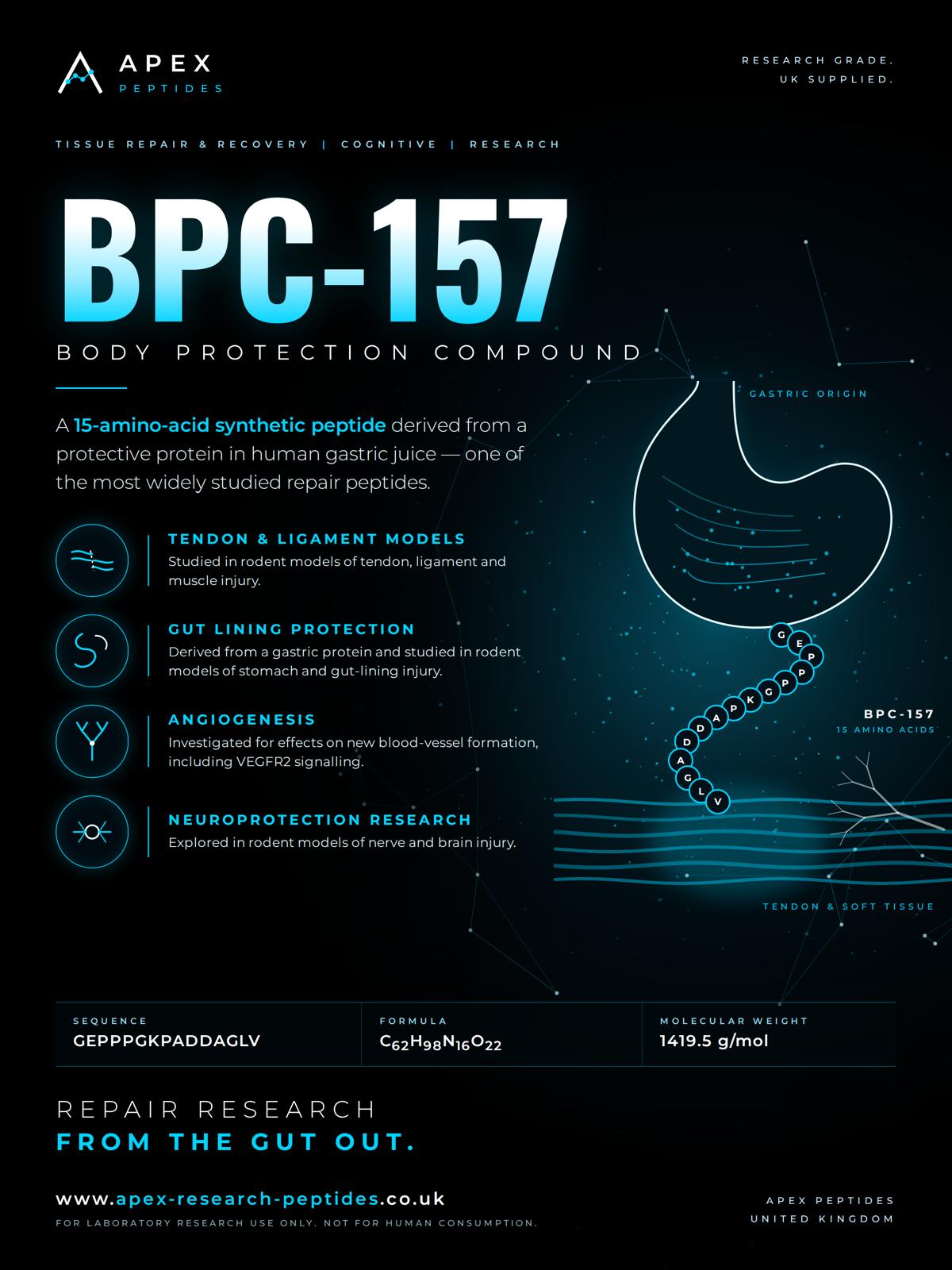
BPC-157: The Regenerative Peptide – Exploring Tissue Repair, Recovery and Cellular Protection
Introduction: What is BPC-157?
BPC-157 (Body Protection Compound-157) is a synthetic peptide consisting of 15 amino acids, originally derived from a protective protein found in human gastric juice.
It has become one of the most widely researched experimental peptides in the field of tissue repair and regenerative medicine.
What makes BPC-157 particularly interesting is the breadth of biological processes being investigated. Scientific studies have explored its potential influence on tendon and ligament repair, muscle recovery, blood vessel formation, gastrointestinal protection and inflammatory responses.
Unlike compounds that target a single biological pathway, BPC-157 appears to interact with several interconnected mechanisms involved in tissue maintenance and repair.
Although much of the evidence currently comes from laboratory and animal studies, the results have generated considerable interest in its potential applications in regenerative research.
1. Tendon and Ligament Repair
One of the most promising areas of BPC-157 research is its potential involvement in tendon and ligament healing.
Tendons and ligaments are particularly challenging tissues to repair because they generally have a relatively limited blood supply compared with many other tissues.
This can make recovery from injuries slow and complicated.
A landmark 2003 study published in the Journal of Orthopaedic Research investigated BPC-157 in rats with surgically transected Achilles tendons.
Researchers reported improvements in several measures of healing, including:
-
Tendon structural organisation.
-
Collagen formation.
-
Biomechanical strength.
-
Functional recovery.
-
Fibroblast development.
The researchers also investigated tendocyte cells, which are responsible for maintaining tendon tissue, and observed encouraging effects under laboratory conditions.
These findings suggest that BPC-157 may influence several biological processes involved in tendon repair.
Further research published in 2010 investigated ligament healing in rats following surgical damage to the medial collateral ligament (MCL).
The researchers reported improvements in functional, biomechanical and histological healing measures.
Together, these studies provide an interesting foundation for investigating BPC-157 in connective tissue regeneration.
2. Muscle Recovery and Tissue Regeneration
Muscle injuries can involve complex biological processes, including inflammation, cellular damage, tissue regeneration and the restoration of normal muscle function.
BPC-157 has been investigated for its potential influence on these processes.
A 2008 study published in Surgical Today examined BPC-157 in a rat model of muscle crush injury.
The research investigated muscle recovery following significant tissue damage and reported encouraging improvements in the healing process.
Other experimental studies have explored its effects on surgically damaged muscle tissue, including muscle structure and functional recovery.
One particularly interesting aspect of this research is the peptide's potential interaction with fibroblasts, collagen formation and vascular development.
These processes are important components of the body's natural tissue-repair response.
While these findings are promising, further human research is necessary to establish whether similar effects occur in people.
3. Angiogenesis: Supporting Blood Vessel Formation
Another important area of BPC-157 research is angiogenesis.
Angiogenesis is the biological process through which new blood vessels develop from existing vessels.
It is an essential part of tissue repair because newly formed blood vessels help deliver oxygen and nutrients to areas undergoing regeneration.
Research published in 2010 investigated BPC-157's influence on angiogenesis in muscle and tendon healing.
Researchers examined the relationship between BPC-157 and vascular endothelial growth factor (VEGF), an important signalling molecule involved in blood vessel formation.
The study found evidence that BPC-157 influenced VEGF expression and blood vessel development in animal models of muscle and tendon injury.
This is particularly interesting because adequate vascular development is an important component of effective tissue repair.
The findings suggest that BPC-157 may influence the vascular processes associated with tissue regeneration.
4. Gastrointestinal Health and Mucosal Protection
BPC-157 was originally identified through research into gastric protective proteins, making gastrointestinal health one of its most established areas of experimental investigation.
The gastrointestinal tract is continuously exposed to mechanical, chemical and biological challenges.
Maintaining the integrity of the gastrointestinal lining is therefore essential for normal digestive function.
Experimental research has investigated BPC-157 in several gastrointestinal models, including:
-
Gastric mucosal injury.
-
Intestinal tissue damage.
-
Inflammatory bowel disease models.
-
Gastrointestinal wound healing.
-
Oesophageal tissue injury.
Researchers have reported protective effects in various animal models, suggesting that BPC-157 may influence mechanisms involved in maintaining gastrointestinal tissue integrity.
Its potential interaction with nitric oxide signalling, inflammatory pathways and vascular function has also attracted scientific interest.
These findings have contributed to continued investigation of BPC-157 in gastrointestinal research.
However, experimental results should not be interpreted as evidence that BPC-157 treats human digestive disorders.
5. Inflammation and Cellular Protection
Inflammation is a natural part of the body's response to injury.
It helps initiate tissue repair, but an excessive or prolonged inflammatory response can interfere with normal recovery.
BPC-157 has been investigated for its potential influence on inflammatory signalling and cellular protection.
Research suggests that it may affect several pathways associated with inflammation, tissue integrity and cellular stress.
A 2025 systematic review published in HSS Journal examined the existing orthopaedic and sports medicine literature.
The authors identified research suggesting that BPC-157 may influence:
-
Growth factor signalling.
-
Angiogenesis.
-
Inflammatory cytokines.
-
Fibroblast activity.
-
Musculoskeletal tissue repair.
The review also highlighted the need for properly designed human clinical trials.
This area of research is particularly interesting because inflammation, vascular development and cellular repair are closely interconnected biological processes.
6. Collagen Formation and Connective Tissue Health
Collagen is the most abundant structural protein in the human body.
It provides strength and support to connective tissues, including:
-
Tendons.
-
Ligaments.
-
Skin.
-
Cartilage.
-
Bone.
-
Muscular connective tissue.
During tissue repair, fibroblasts help produce and organise collagen, contributing to the restoration of damaged structures.
Several BPC-157 animal studies have reported improvements in collagen organisation and tissue structure following injury.
The 2003 Achilles tendon study, for example, reported improvements in collagen and fibroblast-related measures alongside better biomechanical outcomes.
This has made collagen organisation and connective tissue regeneration an important focus of BPC-157 research.
Rather than simply examining whether tissue appears repaired, researchers are interested in how effectively the repaired tissue restores its structural and mechanical properties.
7. What Does the Scientific Evidence Tell Us?
BPC-157 has attracted considerable scientific attention because of the consistency of several promising findings across experimental models.
The strongest areas of preclinical research include:
Tendon research: Encouraging findings involving Achilles tendon structure, collagen organisation and biomechanical recovery in animal models.
Ligament research: Experimental improvements in ligament healing following surgical injury in rats.
Muscle research: Positive findings in animal models of muscle injury and tissue regeneration.
Angiogenesis: Evidence of involvement in VEGF signalling and blood vessel development.
Gastrointestinal research: Protective effects in several experimental models of gastrointestinal tissue injury.
Inflammatory signalling: Research suggesting interactions with pathways involved in inflammation and cellular protection.
What about human research?
Human evidence remains extremely limited.
A 2025 systematic review identified 36 relevant studies, of which 35 were preclinical and only one was a clinical study.
A further systematic review published in October 2026 identified three small human studies involving a total of 30 participants across different indications.
Although these early reports are interesting, their methodological limitations mean that they cannot establish clinical effectiveness or long-term safety.
There are currently no high-quality randomised controlled trials demonstrating that BPC-157 reliably heals human tendon injuries, repairs ligaments or treats gastrointestinal disease.
This distinction is important when evaluating the peptide's potential.
Conclusion: Why Is BPC-157 Generating So Much Interest?
BPC-157 represents an interesting area of research within regenerative medicine and tissue biology.
Its potential involvement in connective tissue repair, collagen organisation, angiogenesis, muscle recovery and gastrointestinal protection has made it an important subject of scientific investigation.
Perhaps its most interesting characteristic is the number of interconnected biological processes being studied in relation to its activity.
From tendon and ligament research to gastrointestinal protection, BPC-157 continues to provide researchers with opportunities to investigate how peptide signalling may influence the body's natural tissue-repair mechanisms.
While much remains to be established through human clinical trials, the existing preclinical research provides a compelling reason for continued scientific investigation.
BPC-157 is an exciting example of how peptide research may contribute to a better understanding of tissue regeneration, cellular protection and the biology of recovery.
Scientific Disclaimer
This article is intended for educational and scientific research purposes only. BPC-157 is an investigational peptide and is not an established or approved treatment for human medical conditions.
Scientific references – original research and reviews
These are direct links to the scientific literature supporting the article.
1. Tendon repair – 2003
Staresinic et al. (2003). Gastric pentadecapeptide BPC 157 accelerates healing of transected rat Achilles tendon and in vitro stimulates tendocytes growth.
Journal of Orthopaedic Research.
Read original research – PubMed
2. Ligament healing – 2010
Pentadecapeptide BPC 157 (PL 14736) improves ligament healing in the rat.
Journal of Orthopaedic Research.
Read original research – PubMed
3. Angiogenesis and muscle/tendon healing – 2010
Modulatory effect of gastric pentadecapeptide BPC 157 on angiogenesis in muscle and tendon healing.
Investigates VEGF expression and blood vessel development.
Read original research – PubMed
4. Tendon-to-bone healing – 2006
Krivic et al. (2006). Achilles detachment in rat and stable gastric pentadecapeptide BPC 157: Promoted tendon-to-bone healing and opposed corticosteroid aggravation.
Journal of Orthopaedic Research.
Read original research – PubMed
5. Muscle recovery – 2008
Novinscak et al. (2008). Gastric pentadecapeptide BPC 157 as an effective therapy for muscle crush injury in the rat.
Surgical Today.
Read original research – PubMed
6. Orthopaedic and sports medicine review – 2025
Vasireddi et al. (2025). Emerging Use of BPC-157 in Orthopaedic Sports Medicine: A Systematic Review.
HSS Journal.
This review evaluates 36 studies and discusses the potential mechanisms, musculoskeletal findings and limitations of the evidence.
Read full scientific review – PubMed Central
7. Regenerative medicine review – 2025
Regeneration or Risk? A Narrative Review of BPC-157 for Musculoskeletal Healing.
Current Reviews in Musculoskeletal Medicine.
Examines angiogenesis, VEGF signalling, fibroblast activity and tissue repair, alongside the limitations of human evidence.
8. Human evidence systematic review – October 2026
Poolton, Minett & Kazmi (2026). Human evidence for BPC-157 in orthopaedic and regenerative medicine: a systematic review of efficacy and safety.
Acta Orthopaedica Belgica.
A particularly useful recent reference for understanding the current state of human research.
Read scientific review – PubMed
A suggestion for your Apex-Peptides website: I'd use the headline "BPC-157: Exploring the Science of Tissue Repair and Regeneration" alongside a short introduction on the product/category page. It is positive, professional and scientifically defensible.
The references above are clickable, so readers can go directly to the original scientific publications rather than relying on secondary claims.
MOTS-c: The Mitochondrial Peptide Unlocking the Potential of Cellular Energy and Metabolic Health
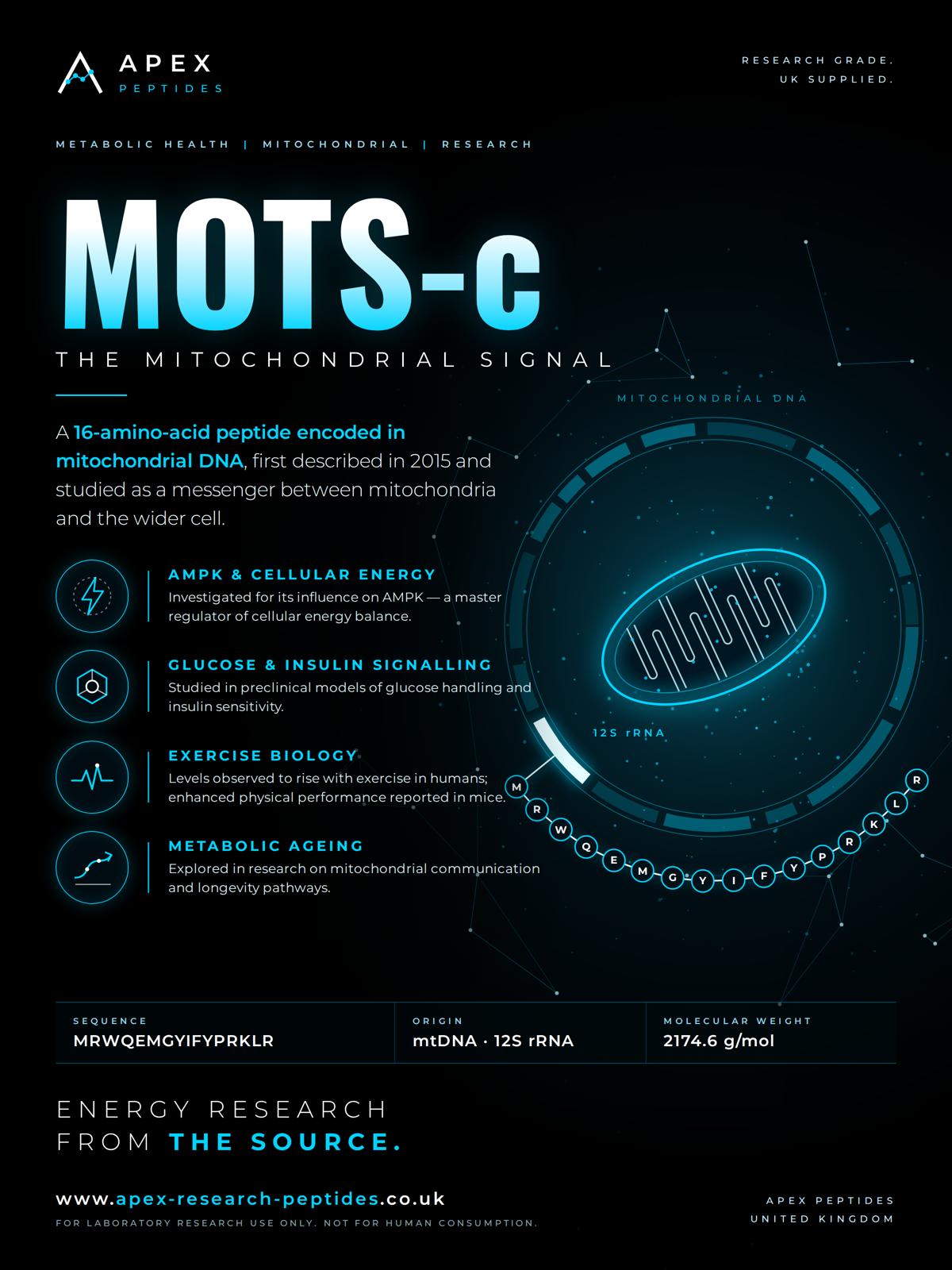 MOTS-c: The Mitochondrial Peptide – Unlocking the Potential of Cellular Energy and Metabolic Health
Introduction: What is MOTS-c?
MOTS-c (Mitochondrial Open Reading Frame of the 12S rRNA-c) is an exciting peptide that has attracted considerable attention in the scientific community for its potential role in metabolic regulation, cellular energy production, physical performance and healthy ageing.
Unlike many other peptides, MOTS-c originates from the mitochondrial genome rather than the nuclear genome.
Mitochondria are often described as the powerhouses of our cells because they are responsible for producing much of the energy our bodies need. However, research increasingly suggests that mitochondria do considerably more than generate energy. They also communicate with other parts of the cell, helping regulate metabolism, stress responses and cellular function.
MOTS-c is particularly interesting because researchers have identified its potential involvement in regulating how the body processes glucose, responds to exercise and maintains metabolic balance.
Although much of the research remains at the laboratory and animal-study stage, the findings have opened up exciting possibilities for future metabolic and longevity research.
1. Metabolic Health and Insulin Sensitivity
One of the most significant areas of MOTS-c research involves glucose metabolism and insulin sensitivity.
Insulin is the hormone responsible for helping cells absorb glucose from the bloodstream. When cells become less responsive to insulin, the body may need to produce more of it to maintain normal blood glucose levels.
This process is known as insulin resistance and is associated with metabolic disorders, including type 2 diabetes.
A landmark 2015 study published in Cell Metabolism identified MOTS-c as a regulator of metabolic homeostasis.
Researchers found that MOTS-c influenced the folate cycle and purine biosynthesis pathways, subsequently activating AMPK (AMP-activated protein kinase).
AMPK is an important cellular energy sensor that helps regulate energy production and utilisation.
In animal models, MOTS-c treatment was associated with:
-
Improved insulin sensitivity.
-
Better glucose regulation.
-
Protection against age-related insulin resistance.
-
Reduced diet-induced obesity.
-
Improved metabolic homeostasis.
These findings suggest that MOTS-c may have an important role in how the body regulates energy and glucose metabolism.
Importantly, these results were obtained in animal models and should not be interpreted as proof of equivalent benefits in humans.
2. AMPK Activation and Cellular Energy
AMPK is sometimes described as the body's metabolic master switch.
It monitors the energy status of cells and helps coordinate processes that maintain an appropriate energy balance.
When AMPK becomes activated, it can influence several important biological processes, including:
-
Glucose uptake.
-
Fatty acid oxidation.
-
Cellular energy production.
-
Mitochondrial function.
-
Regulation of metabolic pathways.
MOTS-c is particularly interesting because research suggests it can activate AMPK through its influence on cellular metabolic pathways.
This places MOTS-c within an important area of research involving mitochondrial signalling and metabolic regulation.
Rather than simply supplying energy, MOTS-c appears to participate in the signalling mechanisms that help cells adapt to changing energy demands.
3. Exercise Performance and Physical Capacity
Another fascinating area of MOTS-c research involves physical performance and exercise adaptation.
A significant 2021 study published in Nature Communications investigated MOTS-c in relation to exercise, skeletal muscle function and ageing.
Researchers demonstrated that exercise increased naturally occurring MOTS-c levels in human skeletal muscle and circulation.
The same research investigated the effects of MOTS-c administration in mice.
The findings included improvements in physical performance across young, middle-aged and older animals.
Researchers also observed changes in:
-
Skeletal muscle metabolism.
-
Metabolic stress responses.
-
Genes associated with cellular adaptation.
-
Mechanisms involved in maintaining muscle function.
These findings suggest that MOTS-c may form part of the biological signalling system responsible for some of the adaptations associated with physical exercise.
The important distinction is that the human component measured naturally produced MOTS-c following exercise. The performance improvements from administered MOTS-c were demonstrated in animal models, not human clinical trials.
Nevertheless, this research provides an interesting insight into the relationship between mitochondrial signalling, exercise and physical capacity.
4. Healthy Ageing and Longevity Research
As we age, mitochondrial function and metabolic efficiency can change.
These changes are associated with alterations in energy production, muscle function and the body's ability to respond to metabolic stress.
MOTS-c has become an interesting subject within longevity research because of its potential involvement in several biological processes associated with ageing.
The 2021 Nature Communications study examined MOTS-c treatment in older mice and reported improvements in physical capacity and measures associated with healthspan.
Healthspan refers to the period of life spent in relatively good health, rather than simply the total number of years lived.
Researchers found that MOTS-c influenced genes involved in metabolism and cellular protein maintenance.
These findings have led to growing interest in mitochondrial-derived peptides as potential regulators of healthy ageing.
However, it is important to recognise that improvements in mouse models do not establish that MOTS-c can extend human lifespan or prevent age-related diseases.
Further human research is required.
5. Mitochondrial Communication and Cellular Stress
One of the most interesting aspects of MOTS-c is that it appears to participate in communication between mitochondria and the cell nucleus.
This process is known as mitochondrial-to-nuclear signalling.
Mitochondria constantly monitor the metabolic environment within cells.
When cells experience metabolic stress, mitochondria can initiate signalling pathways that influence how the nucleus regulates gene expression.
Research suggests that MOTS-c can enter the nucleus under certain metabolic stress conditions and influence the expression of genes involved in cellular adaptation.
This is particularly interesting because it suggests MOTS-c may act as more than a metabolic regulator.
It may also help coordinate how cells respond to environmental and metabolic challenges.
Understanding these mechanisms could contribute to future research into metabolic resilience and cellular health.
6. What Does the Research Actually Tell Us?
MOTS-c is supported by a growing body of scientific research, but it is important to distinguish between laboratory findings, animal studies and human clinical evidence.
The strongest findings to date include:
Metabolic regulation: Animal studies have demonstrated improvements in insulin sensitivity and metabolic homeostasis.
AMPK activation: Research has identified an important relationship between MOTS-c and AMPK signalling.
Exercise response: Human studies have demonstrated that naturally occurring MOTS-c levels can increase following exercise.
Physical performance: Animal research has demonstrated improvements in physical capacity following MOTS-c administration.
Ageing research: Studies in older mice have identified promising effects on physical capacity and measures associated with healthspan.
What remains unknown?
There are currently important gaps in our understanding of MOTS-c.
These include:
-
Its safety profile when administered to humans.
-
Appropriate human dosing.
-
Long-term effects.
-
Human pharmacokinetics and metabolism.
-
Whether the benefits demonstrated in animal studies translate into humans.
The FDA's July 2026 scientific assessment also highlighted the lack of human exposure data and insufficient safety information for MOTS-c-related substances.
Consequently, MOTS-c should be considered an investigational research peptide rather than an established treatment.
Conclusion: Why Is MOTS-c Generating So Much Interest?
MOTS-c represents an exciting development in mitochondrial and metabolic research.
Its potential involvement in AMPK activation, glucose metabolism, exercise adaptation, skeletal muscle function and healthy ageing makes it an important subject for ongoing scientific investigation.
Perhaps most interestingly, MOTS-c provides another example of how mitochondria can actively communicate with the rest of the cell and influence fundamental biological processes.
Although further research is needed before its potential applications in humans can be properly established, the existing findings provide a compelling foundation for future studies.
As our understanding of mitochondrial-derived peptides continues to develop, MOTS-c may become an increasingly important molecule in the study of metabolic health, cellular energy and longevity.
The future of metabolic research may involve looking beyond the cell itself and understanding the signals produced by the mitochondria within it.
Scientific references and original research
The following are the primary scientific publications supporting the article. These links take you directly to the published research or full scientific papers.
1. Original MOTS-c discovery – 2015
Lee et al. (2015). The mitochondrial-derived peptide MOTS-c promotes metabolic homeostasis and reduces obesity and insulin resistance.
Published in: Cell Metabolism.
This is the landmark paper identifying MOTS-c and demonstrating its role in metabolic regulation in animal models.
Full scientific paper – PubMed Central
2. MOTS-c and muscle and fat metabolism – 2016
Lee, Kim & Cohen (2016). MOTS-c: A novel mitochondrial-derived peptide regulating muscle and fat metabolism.
Published in: Free Radical Biology and Medicine.
Explores the potential relationship between MOTS-c, skeletal muscle, fat metabolism and metabolic health.
Full scientific paper – PubMed Central
3. MOTS-c, exercise and healthy ageing – 2021
Reynolds et al. (2021). MOTS-c is an exercise-induced mitochondrial-encoded regulator of age-dependent physical decline and muscle homeostasis.
Published in: Nature Communications.
Investigates exercise-induced MOTS-c expression in humans and the effects of MOTS-c administration on physical performance in animal models.
Full scientific paper – Nature Communications
4. Exercise and circulating mitochondrial-derived peptides – 2021
Acute endurance exercise stimulates circulating levels of mitochondrial-derived peptides in humans.
Investigates how physical exercise influences circulating mitochondrial-derived peptides, including MOTS-c.
5. MOTS-c and insulin regulation in human subjects – 2019
Lipids and insulin regulate mitochondrial-derived peptide (MOTS-c) in PCOS and healthy subjects.
Investigates the relationship between circulating MOTS-c, insulin and lipid metabolism in human participants.
6. FDA scientific safety assessment – 2026
FDA Pharmacy Compounding Advisory Committee briefing document.
Reviews the available scientific evidence and highlights the lack of human safety and exposure data for MOTS-c.
GHK-Cu: The Copper Peptide with Promising Regenerative Properties
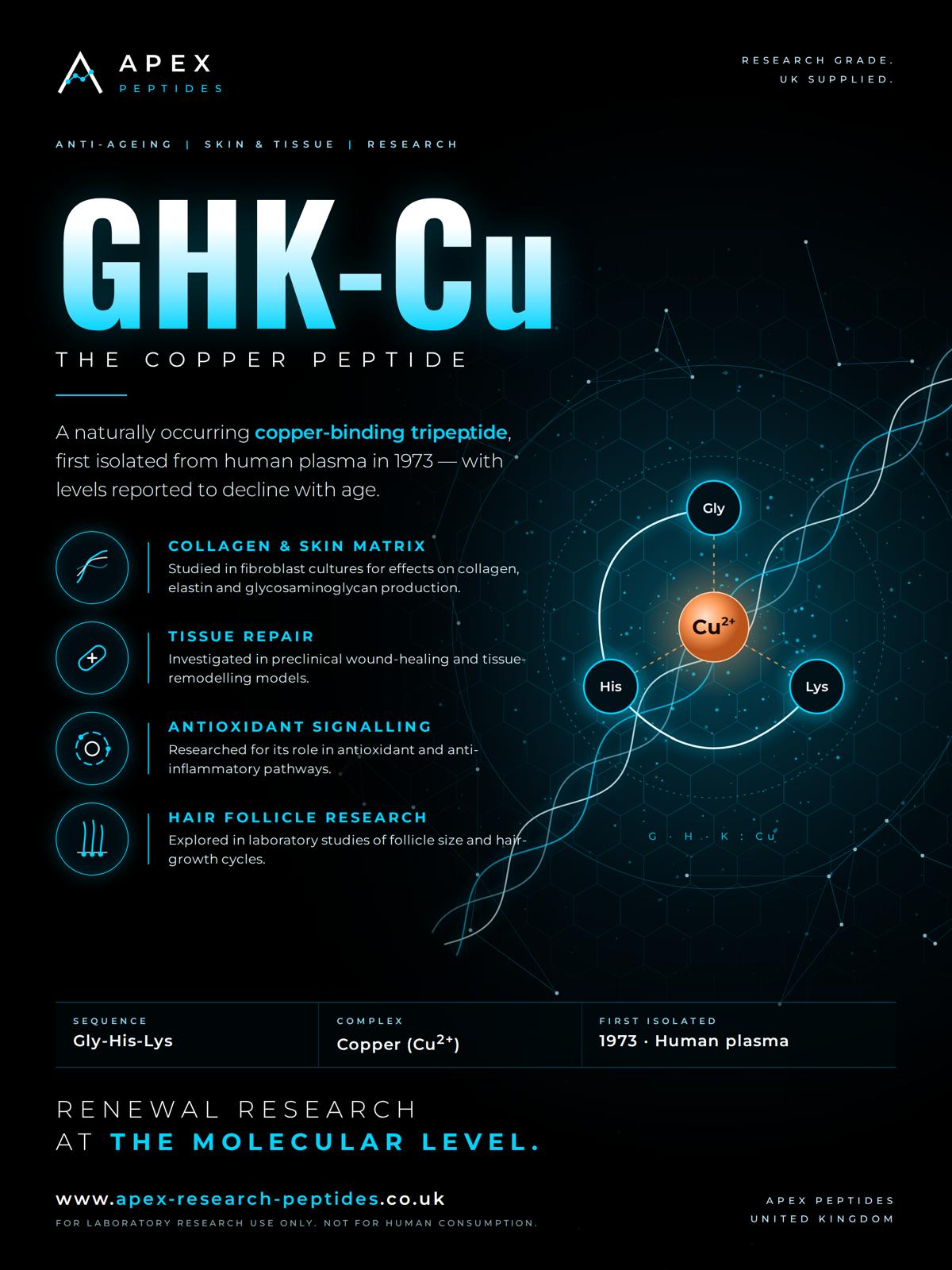 GHK-Cu: The Copper Peptide with Promising Regenerative Properties
Exploring the science behind one of the most interesting peptides in modern regenerative research.
GHK-Cu is rapidly gaining attention in the worlds of skincare, regenerative science and longevity research. Known as a copper-binding tripeptide, GHK-Cu has been investigated for its potential effects on collagen production, skin regeneration, wound healing and cellular repair.
But what exactly is GHK-Cu, and why is it attracting so much scientific interest?
Let’s explore the science behind this fascinating peptide and the potential benefits being investigated.
What Is GHK-Cu?
GHK-Cu stands for Glycyl-L-Histidyl-L-Lysine Copper. It is a naturally occurring copper-binding peptide consisting of three amino acids attached to a copper ion.
Interestingly, GHK is naturally present in human plasma, with levels that appear to decline as we age.
Copper itself is an essential trace mineral involved in numerous biological processes, including collagen formation, antioxidant defence and tissue maintenance.
GHK-Cu has attracted scientific interest because of its ability to interact with several biological pathways associated with tissue maintenance and regeneration.
1. Supporting Collagen Production and Skin Health
One of the most researched potential benefits of GHK-Cu is its relationship with collagen production.
Collagen is an essential structural protein responsible for maintaining the strength, elasticity and firmness of our skin.
As we age, natural collagen production decreases. This contributes to:
* Fine lines and wrinkles.
* Reduced skin elasticity.
* Thinner, less resilient skin.
* Changes in skin texture.
* Loss of firmness.
Laboratory research suggests that GHK-Cu may stimulate processes involved in collagen synthesis and extracellular matrix remodelling.
This has made it particularly interesting in cosmetic and dermatological research, where scientists are investigating its potential to support healthier-looking, more resilient skin.
2. Skin Repair and Regeneration
GHK-Cu has demonstrated interesting properties in laboratory and animal studies relating to tissue repair.
Research suggests it may influence several processes involved in skin regeneration, including:
* Fibroblast activity.
* Collagen and elastin production.
* Formation of new blood vessels.
* Extracellular matrix remodelling.
* Cellular migration during tissue repair.
These processes are important because healthy tissue maintenance requires more than simply producing new collagen. It also requires the organisation and restoration of the surrounding tissue structure.
This is one reason GHK-Cu continues to attract attention in regenerative medicine research.
3. Potential Anti-Inflammatory Properties
Inflammation is a natural part of the body’s response to injury. However, excessive or prolonged inflammation can contribute to tissue damage.
Preclinical research suggests that GHK-Cu may influence inflammatory signalling pathways and help regulate certain inflammatory responses.
This potential activity is particularly interesting because balanced inflammatory responses are important for maintaining healthy tissue and supporting normal repair processes.
GHK-Cu is therefore being investigated for its potential role in supporting a healthier cellular environment.
4. Antioxidant Activity and Cellular Protection
Oxidative stress occurs when the production of reactive oxygen species exceeds the body’s antioxidant defences.
Over time, oxidative stress can contribute to cellular damage and is associated with several aspects of the ageing process.
Research into GHK-Cu suggests potential antioxidant activity, including effects on pathways involved in cellular protection and oxidative stress regulation.
This has led to interest in its possible applications in skin ageing and cellular health research.
5. Potential Benefits for Hair and Scalp Research
Another interesting area of GHK-Cu research is hair follicle biology.
Hair growth is a complex process involving multiple signalling pathways, growth factors and interactions between different types of cells.
GHK-Cu is being investigated for its potential influence on:
* Hair follicle cellular activity.
* Skin and scalp tissue health.
* Cellular signalling associated with hair growth.
* The environment surrounding hair follicles.
Early research is encouraging, although larger and better-controlled human studies are needed before meaningful conclusions can be drawn about its effectiveness for hair growth.
6. Gene Expression and Cellular Signalling
Perhaps one of the most interesting aspects of GHK-Cu is its potential influence on gene expression.
Gene expression determines how cells use their genetic information to carry out different functions.
Laboratory research suggests that GHK-Cu can influence the expression of numerous genes associated with:
* Tissue repair.
* Inflammation.
* Antioxidant defence.
* Cellular maintenance.
* Extracellular matrix production.
Rather than acting through just one biological pathway, GHK-Cu appears to interact with several interconnected cellular processes.
This broad biological activity is one of the reasons it remains an interesting subject for ongoing scientific investigation.
Why Is GHK-Cu Attracting So Much Attention?
What makes GHK-Cu particularly interesting is the range of biological processes it appears to influence.
Unlike compounds investigated for a single biological function, GHK-Cu has demonstrated potential activity across several areas of regenerative biology.
Its research applications include:
* Skin health and cosmetic science.
* Collagen synthesis.
* Tissue repair.
* Cellular protection.
* Inflammatory signalling.
* Hair follicle research.
* Extracellular matrix remodelling.
However, it is important to distinguish between promising laboratory findings and proven clinical benefits. Human research remains relatively limited, and further controlled studies are needed.
What Does the Future Hold for GHK-Cu?
Research into peptides continues to expand, with scientists increasingly interested in understanding how naturally occurring signalling molecules influence cellular behaviour.
GHK-Cu is an interesting example of this developing field.
Its potential involvement in collagen production, tissue remodelling, antioxidant pathways and cellular repair makes it an important subject for further investigation.
As research progresses, we may gain a much better understanding of how copper-binding peptides could contribute to future developments in dermatology, cosmetic science and regenerative medicine.
Final Thoughts
GHK-Cu is much more than just another copper peptide.Its interaction with multiple biological pathways has made it one of the more interesting compounds in regenerative peptide research.
Although further human clinical research is required, the existing scientific literature provides a fascinating insight into its potential applications.
For anyone interested in the science of peptides, cellular health and regenerative research, GHK-Cu is certainly a compound worth understanding.
Apex-Peptides | Advancing Knowledge Through Research
Disclaimer: This article is provided for educational and scientific information purposes only. GHK-Cu is an investigational peptide and is not an approved treatment for any medical condition.
Scientific References & Further Reading
Scientific References & Further Reading
The following scientific publications provide further information on GHK-Cu, its biological properties and its potential applications in regenerative and cosmetic research.
1. Regenerative and Protective Actions of the GHK-Cu Peptide in the Light of the New Gene Data (2018)
Pickart L, Margolina A.
International Journal of Molecular Sciences.
Read the full scientific paper - Link
2. GHK Peptide as a Natural Modulator of Multiple Cellular Pathways in Skin Regeneration (2015)
Pickart L.
BioMed Research International.
Read the full scientific paper - Link
3. Topically Applied GHK as an Anti-Wrinkle Peptide: Advantages, Problems and Prospective (2024/2025)
Mortazavi SM, Mohammadi Vadoud SA, Moghimi HR.
BioImpacts.
Read the full scientific paper - Link
4. GHK-Cu as a Bioactive Metallopeptide and Drug-Delivery Cargo: Coordination Chemistry, Formulation Science, Therapeutic Evidence, and a Translational Roadmap (2026)
A review examining the chemistry, biological research, delivery systems and clinical evidence surrounding GHK-Cu.
Unlocking Youthful Vitality:NAD+ The Cellular Fuel Behind Energy, Recovery and Healthy Ageing
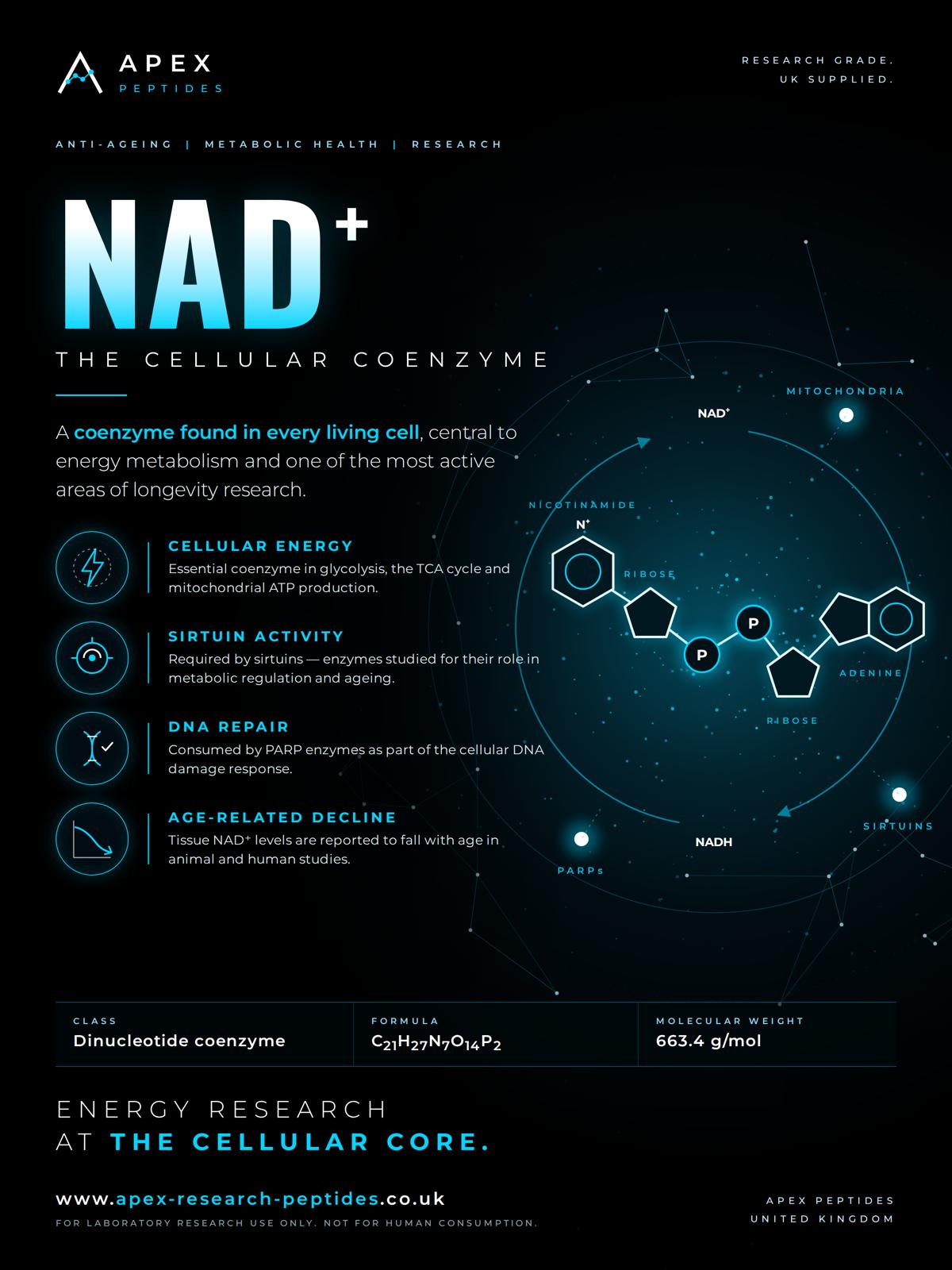
NAD+ – The Cellular Fuel Behind Energy, Recovery and Healthy Ageing
Introduction: What Is NAD+?
Nicotinamide Adenine Dinucleotide (NAD+) is one of the most important molecules found in the human body. Present in virtually every living cell, NAD+ plays a fundamental role in energy production, cellular repair, DNA maintenance and metabolic function.
Although NAD+ has existed in scientific research for decades, it has recently attracted significant attention in the fields of longevity, regenerative medicine and healthy ageing.
One of the reasons for this growing interest is the discovery that NAD+ availability can change as we age. Researchers are investigating whether supporting NAD+ levels could help maintain cellular function and support healthier ageing.
But what exactly does NAD+ do, and why is it attracting so much attention?
1. Cellular Energy Production
One of NAD+'s primary functions is supporting the production of cellular energy.
Our cells rely on mitochondria, often described as the powerhouses of the cell, to convert nutrients into usable energy in the form of ATP (adenosine triphosphate).
NAD+ is essential to this process because it acts as a coenzyme, accepting and transferring electrons during metabolic reactions.
Without sufficient NAD+, the body's ability to efficiently convert nutrients into energy would be compromised.
This makes NAD+ particularly important for:
-
Normal cellular energy production.
-
Mitochondrial function.
-
Metabolic processes.
-
Maintaining normal tissue function.
Healthy mitochondrial function is particularly important in tissues with high energy requirements, including the brain, heart and skeletal muscles.
2. NAD+ and Healthy Ageing
One of the most interesting areas of NAD+ research concerns its relationship with ageing.
Research suggests that NAD+ metabolism can change with age, potentially affecting several biological processes associated with cellular ageing.
NAD+ is involved in regulating enzymes called sirtuins, which participate in cellular stress responses, metabolic regulation and DNA maintenance.
Sirtuins are sometimes described as longevity-associated proteins because of their involvement in pathways connected with ageing and cellular health.
Researchers are particularly interested in how maintaining NAD+ availability might influence these processes..
3. Supporting DNA Repair and Cellular Maintenance
Every day, our cells experience DNA damage caused by normal metabolic activity, environmental factors and oxidative stress.
The body has sophisticated repair mechanisms to identify and correct this damage.
NAD+ plays an important role in supporting enzymes known as PARPs (Poly ADP-Ribose Polymerases).
These enzymes participate in detecting and responding to DNA damage.
NAD+ is also required by several other enzymes involved in cellular signalling and maintenance.
Because NAD+ is consumed during some of these processes, maintaining normal NAD+ metabolism is an important area of ongoing scientific investigation.
This has led researchers to investigate whether NAD+ restoration could support cellular resilience as we age.
4. NAD+ and Mitochondrial Health
Mitochondria are essential for producing the energy required by our bodies.
As we age, changes in mitochondrial function can occur, potentially affecting energy metabolism and cellular performance.
NAD+ is central to mitochondrial metabolism and the processes that allow cells to generate energy.
Scientific research has investigated the relationship between NAD+ availability, mitochondrial function and metabolic health.
Animal studies have produced particularly interesting findings, with NAD+ precursor supplementation showing potential improvements in mitochondrial function and aspects of metabolic health.
5. Brain Health and Cognitive Function
The brain is one of the body's most energy-demanding organs.
NAD+ contributes to the metabolic processes that support normal neuronal function and cellular energy production.
Researchers are investigating its potential role in:
-
Neuronal energy metabolism.
-
Cellular stress responses.
-
DNA repair mechanisms.
-
Neuroinflammation.
-
Age-related neurological changes.
There is considerable interest in whether supporting NAD+ metabolism could eventually contribute to strategies for maintaining brain health.
However, it is important to distinguish promising laboratory research from proven clinical benefits. NAD+ supplementation has not been established as a treatment for Alzheimer's disease, dementia or other neurological conditions.
6. NAD+ and Metabolic Health
NAD+ is closely connected to the body's metabolic pathways.
It participates in processes involving glucose, fatty acids and other nutrients.
It also influences signalling pathways associated with insulin sensitivity and metabolic regulation.
Researchers are exploring whether NAD+ precursors such as NMN (Nicotinamide Mononucleotide) and NR (Nicotinamide Riboside) could help support metabolic health.
Some human studies have reported improvements in specific metabolic markers, although results have been inconsistent.
More extensive clinical research is needed before NAD+ supplementation can be considered an established approach to improving metabolic health.
7. Why Do NAD+ Levels Matter?
NAD+ is continuously produced and consumed by the body.
Its availability is influenced by several factors, including:
-
Ageing.
-
Metabolic activity.
-
Cellular stress.
-
Nutritional status.
-
Enzyme activity.
-
Individual biological differences.
Research suggests that NAD+ levels may decline in certain tissues as we age, although this is not consistent across all human studies.
This has created significant interest in NAD+-supporting strategies, including nutritional precursors and direct NAD+ administration.
8. NAD+, NMN and NR – What's the Difference?
These three terms are frequently mentioned together, but they are not the same.
NAD+
The active coenzyme involved in cellular energy metabolism, DNA repair and cellular signalling.
NMN (Nicotinamide Mononucleotide)
A naturally occurring molecule used by the body as an intermediate in NAD+ production.
NR (Nicotinamide Riboside)
Another NAD+ precursor that can be converted through cellular pathways to support NAD+ production.
Both NMN and NR have been investigated in human clinical trials.
Research has demonstrated that oral NMN and NR can increase certain NAD-related blood biomarkers. However, increasing these biomarkers does not automatically mean that a person will experience improvements in energy, longevity or physical performance.
9. What Does the Scientific Evidence Say?
NAD+ research is developing rapidly.
Human clinical studies have demonstrated that certain NAD+ precursors can increase NAD-related metabolites in the bloodstream.
However, evidence for improvements in broader health outcomes remains mixed.
A particularly important 2025 review published in Nature Metabolism highlighted the gap between promising preclinical research and the more limited clinical evidence available in humans.
A 2025 Nature Aging review also examined the developing clinical applications of NAD+-related therapies.
Importantly, direct NAD+ administration through intravenous or intramuscular routes has considerably less clinical outcome evidence than oral precursor supplementation.
This is an area where further controlled human trials are needed.
Conclusion: Why NAD+ Is Generating So Much Interest
NAD+ sits at the centre of several essential biological processes.
From mitochondrial energy production and metabolic regulation to DNA repair and cellular signalling, it is fundamental to maintaining normal cellular function.
Its relationship with ageing has made it an important subject of longevity research.
While early scientific findings are encouraging, NAD+ should not be viewed as a proven anti-ageing treatment or a cure for age-related conditions.
What is clear is that NAD+ metabolism represents an exciting area of modern biomedical research, with ongoing studies exploring how supporting these pathways might contribute to healthier ageing and improved cellular function.
As research continues, NAD+ is likely to remain an important molecule in the evolving field of longevity science.
Apex-Peptides | Advancing Knowledge Through Science
For research and educational purposes only. This article is not medical advice. NAD+ products and related compounds should not be considered treatments for medical conditions. Consult a qualified healthcare professional before considering any intervention.
Scientific References & Research Papers
These are the original scientific publications supporting the information in the article. I've prioritised peer-reviewed research and major scientific reviews.
1. NAD+ metabolism and ageing – Nature Reviews Molecular Cell Biology (2021)
An important review examining NAD+ metabolism and its involvement in cellular ageing, energy production and cellular signalling.
Read the scientific paper - Link
2. Nicotinamide Adenine Dinucleotide in Aging Biology – Endocrine Reviews (2023)
Examines NAD+ biology, potential therapeutic applications and the limitations of current research.
Read the scientific paper - Link
3. The Safety and Antiaging Effects of NMN in Human Clinical Trials (2023)
A review of human clinical trials investigating NMN supplementation, safety and potential anti-ageing effects.
Read the scientific paper - Link
4. NAD+ Precursor Supplementation in Human Ageing – Nature Metabolism (2025)
An especially relevant review examining the clinical evidence for NAD+ precursors and their potential applications in human ageing.
Read the scientific paper - Link
5. Emerging Strategies, Applications and Challenges of Targeting NAD+ in the Clinic – Nature Aging (2025)
Explores the developing clinical applications of NAD+-targeted therapies, including safety, bioavailability and efficacy.
Read the scientific paper - Link
Research takeaway: NAD+ has a strong biological rationale and growing human research behind it. However, increased NAD+ biomarkers should not be confused with proven improvements in longevity or health.